“We choose to go to the Moon in this decade and do the other things, not because they are easy, but because they are hard, because that goal will serve to organize and measure the best of our energies and skills, because that challenge is one that we are willing to accept, one we are unwilling to postpone, and one which we intend to win, and the others, too.” John F. Kennedy might have not known this, but the same text applies also to my trip to Israel. Going to Israel have been on my bucket list for a long time already. When this year finally it looked like a possibility then I jumped to it at once. After about one month of planning, I finally boarded the plane and started my journey. Flying Ryanair, as you probably know, is all about choices. What services to buy and when. I tried to keep it as simple as possible but eventually, my 20kg suitcase was more important for them than me and I just tagged along for the ride. 90 euros for the suitcase and 40 euros for me. I usually choose the random seat allocation…it’s just more fun that way, but they usually put you on the middle seat then. In some cases it’s OK and you have an empty seat next to you. For the first part of the journey, it was just like that which was quite nice.
In order to get to Israel, there were many options where to transfer. I chose Paphos in Cyprus. The first leg of the flight took about 4 hours and landed around 2:30 PM. Paphos has a small airport so they managed to get us off the plane, through the PCR testing site and through the passport control and customs in one hour. The PCR testing took place in a hangar on the side of the airport and took about 30 minutes for the full plane. There were 3 persons registering and doing the money collecting (19 EUR per person) and two nurses who took the samples from the nose. Already the same evening the results came back. Well done. Compared with the PCR test that I was required to take within 72 hours before the trip cost 43 euros and took 25 hours to issue a suitable travel certificate. It was about 16 degrees outside and I had about 4 hours to kill before my second flight that day from Paphos to Tel-Aviv. So I took my precious suitcase, bought a chicken sandwich and went to enjoy the sun. The airport is located right on the coastline. Just through the parking lot and there we were, me and my suitcase, on the shore of the Mediterranean sea, enjoying the first day of my holiday. We had just enough time to eat, read a National Geographic magazine about pirates and look at the sea before the sunset around 5:30 PM. It was still one hour before the check-in opened and could send my suitcase on its way. The flight to Israel took only about one hour, but the plane was so full it took a long time to fit everybody in. Still, they managed to arrive at Tel Aviv Ben Gurion airport 15 minutes earlier than planned. The organisation there was much easier than I expected. I had read that it might take a long time and might include a lot of questioning, but I didn’t experience that. The automatic passport control machine didn’t like my passport though and some guy there had to register it manually, but everything went still smoothly. Israel is not stamping your passport anymore so that You don’t get into trouble travelling to some other less friendly countries in the future. Instead, they give you a small blue voucher which becomes a really important document after issuing. It gets you through all the other gates in the airport on the way to the city and even gives you VAT exemption in the Airbnb once you send them a copy. All the people were directed to the PCR testing facility before allowing them to step outside. This was already a much bigger operation than the one in Cyprus. Huge hangar, a lot of testing stations and prepaid vouchers with barcodes that proved you had paid the fee beforehand. The price of the test was 22 EUR, and you were supposed to go self-isolation that lasts for 24 hours or until you receive a negative result on the test that you will take upon arrival at the airport in Israel – whichever is earlier. The process went quite fast. The nurse managing the station I was queuing to, was even very polite and smiling at 10PM while swabbing my nostrils and inside the mouth before giving me a pink band around my wrist and sending me away. My next objective was to find the right train and get to it in time. Buying the ticket wasn’t too difficult and finding my way to the right platform wasn’t either. Thanks to the fact that the plane arrived 15 minutes early, I managed to get to the right platform just 5 minutes before the scheduled time of 22:22. It took only 10 minutes to ride to the next stop HaHagana train station, where I stepped outside and discovered it was raining. There I was, without any local internet connection to order a Gett taxi or Rav-Kav transport card that allows you to take the bus. Luckily, I wasn’t too far away from my apartment. It was basically 1,5 km straight along the same road, so I wrapped my backpack into a plastic rain poncho and started walking. Thanks to Google offline maps I knew where to go and found the place easily. After getting in I basically just took a shower and went directly to bed without any food or second thought. Except connecting to the local WIFI network to be sure that it works.
FRIDAY
I woke up at 6:41. As usual. Without the alarm. Just my biological clock I presume. It was Friday morning which means basically the start of the weekend here. Everything closes early, before the beginning of the Sabbath. The first order of business was to find some breakfast. So, I went to a nearby store and bought myself some cereal, milk and bananas. And a type H electric plug converter. Yes, they have an Israel specific plug here that almost nobody else uses. Why, I really don’t care. But that requires a specific adapter so that some of the technology in my bag could continue to work. Later I found out that one extra pin is basically useless, and my cables work perfectly well with just two of them. My phone still had 30% left in the morning from all the travelling, so that wasn’t too bad. At 9 o’clock in the morning the PCR test result arrived. Negative of course as it was already the second negative test I took that day.

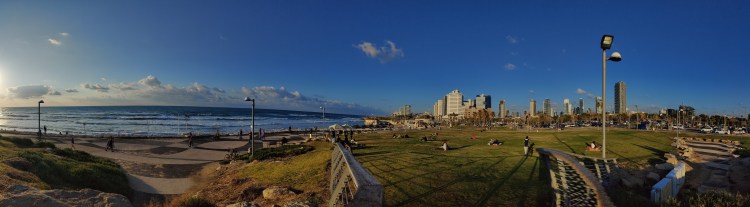
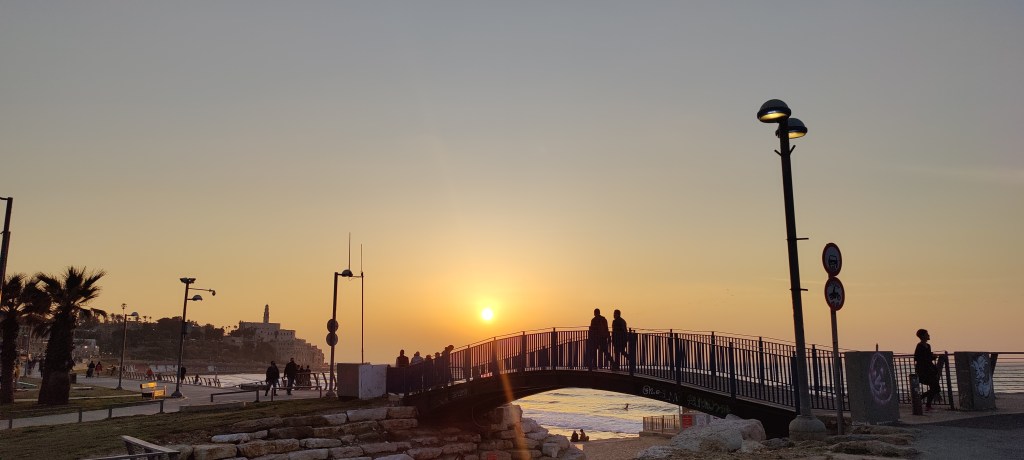
First things first and I needed a local SIM card to be able to get around. So, I walked down to the Dizengoff centre (named after the first mayor of Tel-Aviv). It’s basically a big mall with all imaginable shops. They also had a guard at the front door to check your bag for weapons. So got the SIM card with more gigabytes for the data plan I normally use in a year for the same price I usually pay for a month. The next thing to find was the Rav-Kav transport card that allows you to use buses, trains and other transportation around the country. They were supposed to sell them in kiosks on the street. It turned out that at least not in the first three. Had a nice chat with a kiosk owner in Russian who offered me to add money to one but didn’t have any to sell. Actually, Russian language you can hear a lot on the streets here. Finally got it though and headed back to the apartment. The plan for the first day was to take it slowly, get the lay of the land, walk around the city and get a feeling of where everything is. So that I did. Ended up at the seaside in the afternoon and walked along the different beaches there next to each other…Charles Clore, Aviv, Jerusalem etc. The sun sets here around 5:30 in February and as it was Friday then the sunset also marks the beginning of Sabbath or the beginning of Saturday. The Jewish people are certain that a new day begins at sunset. I had one more task planned for the day…to rent a bike. So got the Lime app running and rented an electric scooter. Good thing I did because I really needed it on the next morning. Riding a scooter on Friday evening in Tel-Aviv is really easy because everybody is home with their families and traffic is non-existent. So I went to see the Rothschild boulevard and left the bike there for the next riders. Surprisingly the streets around the boulevard were full of people. As traffic was gone then the restaurants had basically taken over the streets and filled them with tables and people. But for the most part the city was empty and quiet.

SATURDAY
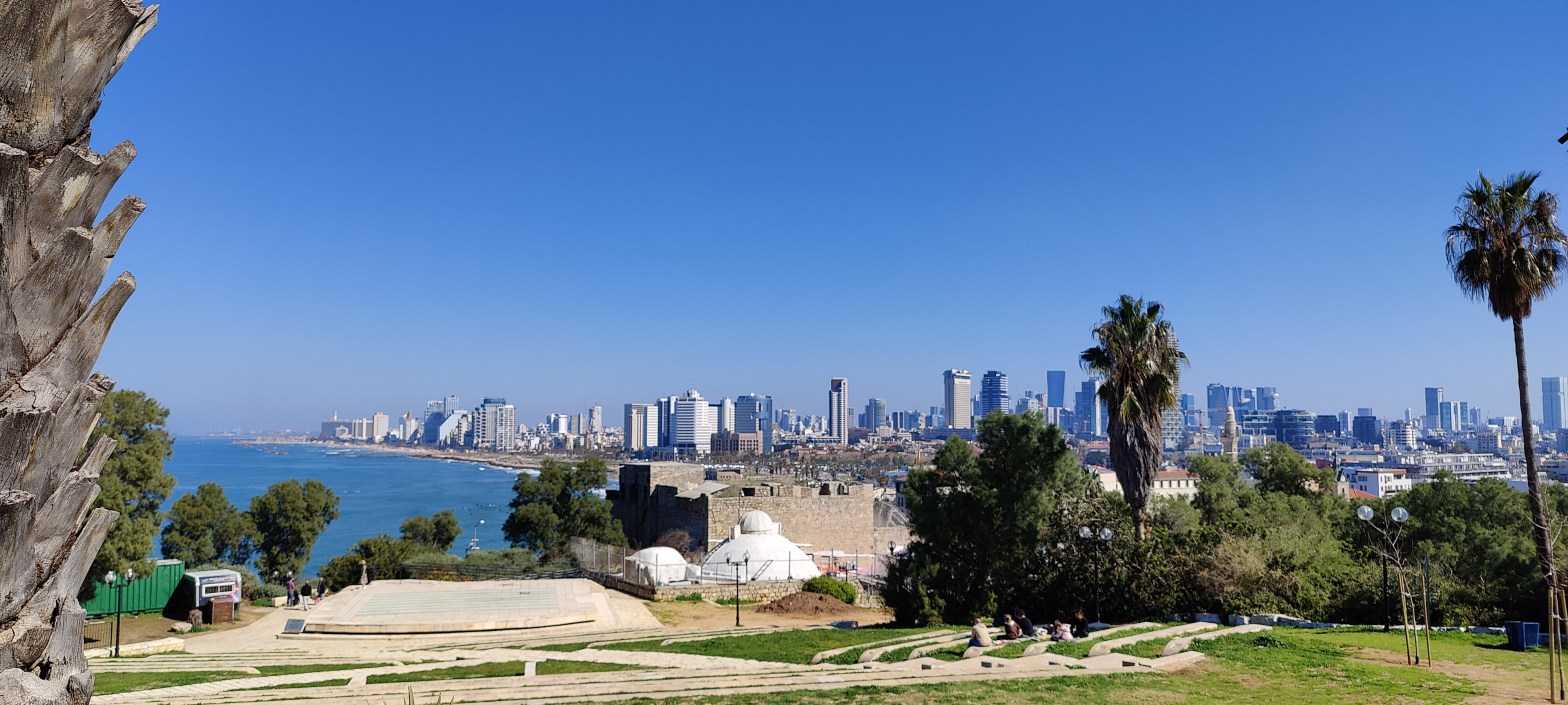
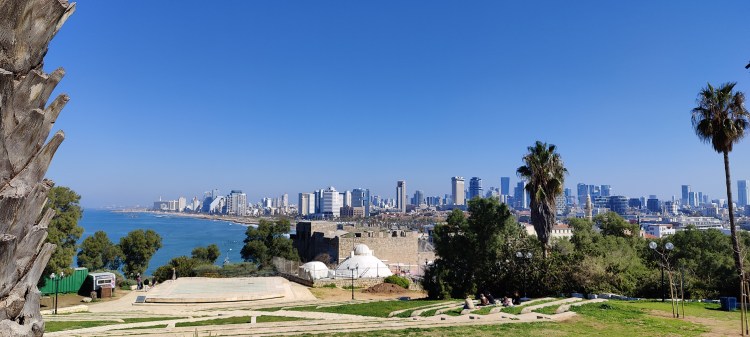
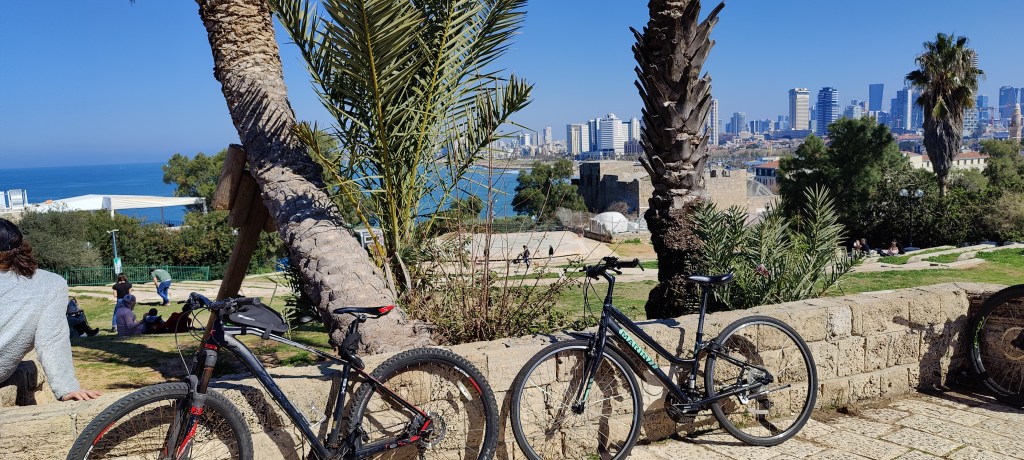
I mean the one that starts in the morning. I woke up 5:41 this time but luckily fell back in sleep and woke finally when my alarm clock went off at 8 AM. I had booked a bike tour for myself on the previous day, and it started at 9:30. So I took the scooter again just outside on the street and drove down to the beach area again. Still, no traffic and I could cruise easily on the main road. Once I reached the promenade the bike started to act strangely and slow down when the gas throttle was down. I guess the battery was dying. I finally got tired of this and changed scooters. I had to because thanks to all the problems I was running out of time. So, I took another one which was fully charged and drove to the rendezvous spot. Just in time in fact. The guide was waiting but he was also a bit surprised because he wasn’t waiting for me. He was waiting for a woman. For some reason, my name in the booking had given him and idea that I was a woman. So, there was a nice women’s bike with a red helmet and a seat all the way down. Instead, he got a Viking-looking bloke that luckily didn’t mind the red helmet or the bike for that matter. It also turned out to be a private tour because no one else had booked it. Suited me just fine. I was happy that I got the guide all for myself. He was in his 60s, born in South Africa to a pair of Jewish parents and been living in Israel already from the 1960s. We started to tour along the coastline all the way to Jaffa. Jaffa is a historic town and port that has been on this coast for thousands of years through all the empires that have ruled the world. And it almost got bulldozed down during the present state of Israel because it was inhabited by criminals, drug addicts etc. In the last hour, a local architect saved it by showing the Tel-Aviv city officials the potential this place could have. It worked and nowadays even some houses that look like they should be bulldozed down are worth millions because of their potential in the real estate market.
According to Greek mythology, the king of Jaffa offered his daughter Andromeda as a sacrifice to assuage the anger of Poseidon, God of the sea, who threatened the city. The beautiful Andromeda was bound to rocks off Jaffa’s coast to await her death. However, the hero Perseus killed the sea monster sent by Poseidon and married Andromeda. Andromeda’s rocks have served for thousands of years as a natural dock, albeit a dangerous one, for commercial vessels and fishing boats.
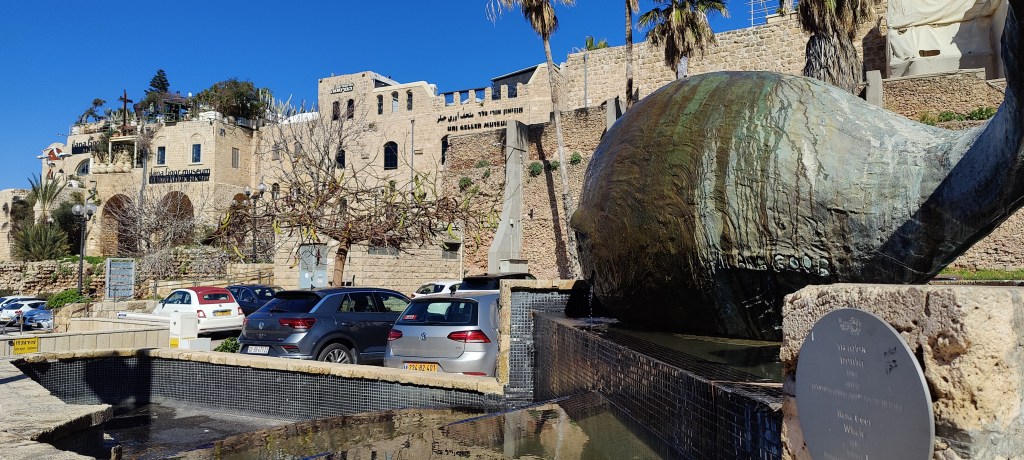
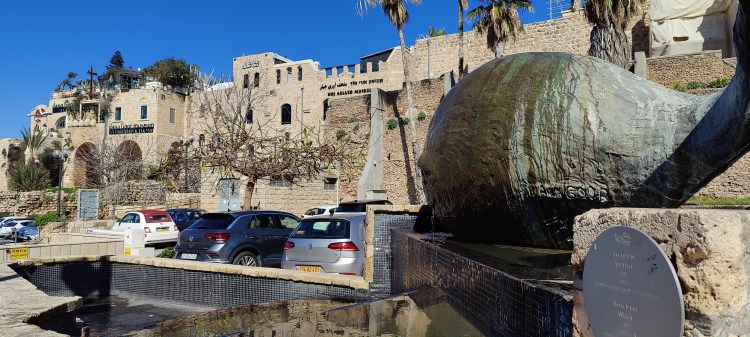
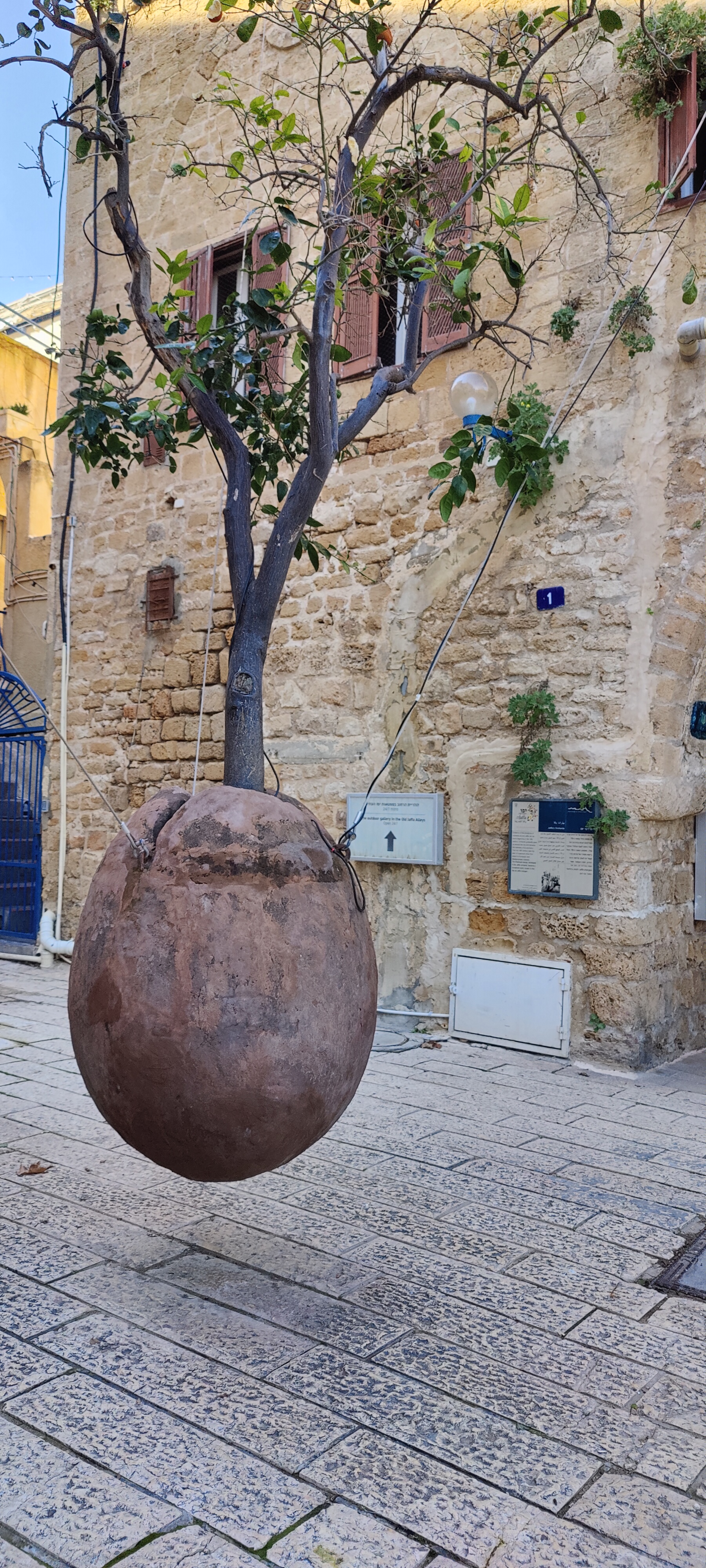
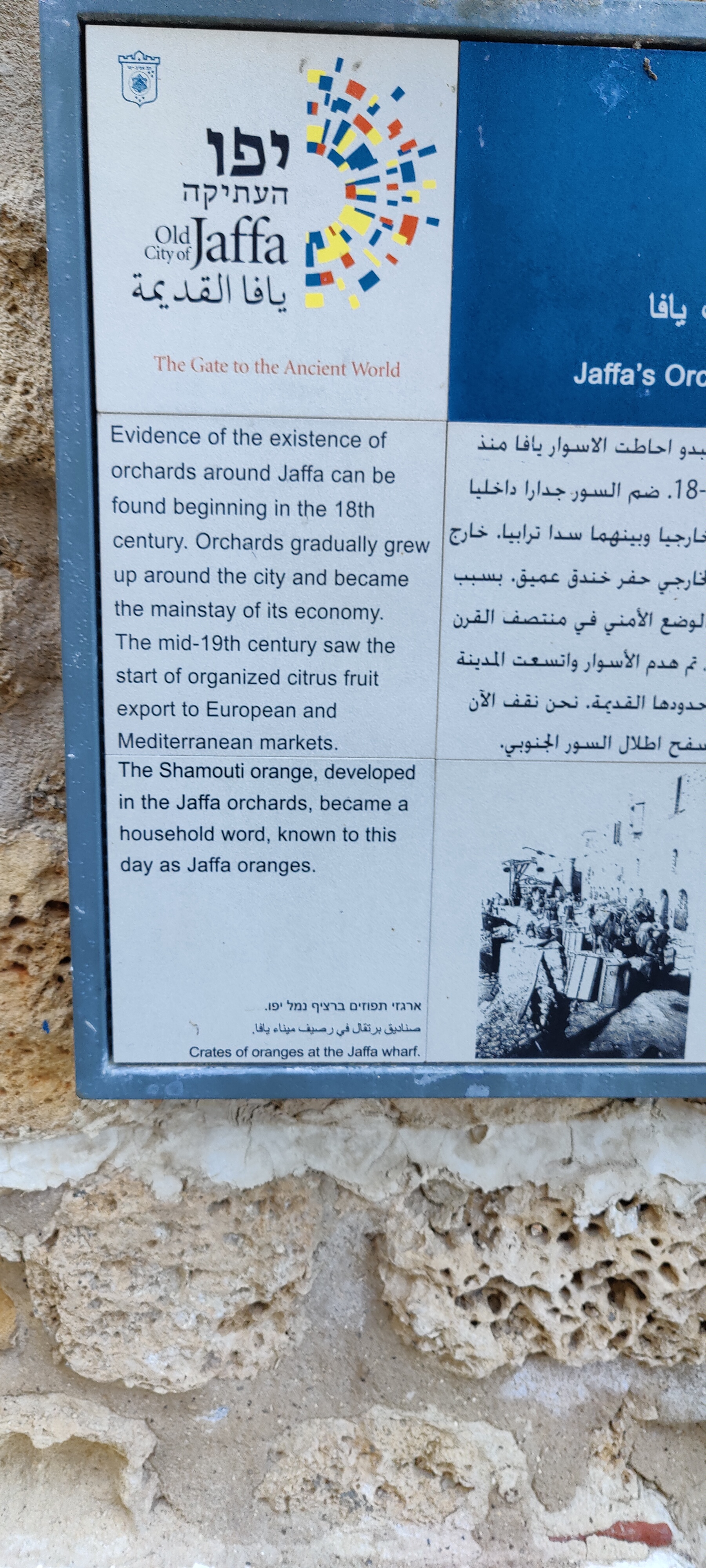
The other famous story connected with Jaffa is the story of Jonah and the whale (although the creature which swallowed Jonah is often depicted in art and culture as a whale, the Hebrew text uses the phrase dag gadol, which means “big fish”.). And then there are the Jaffa oranges of course, which were the main export article of the region for a long time. Not anymore though. One surprising detail about Jaffa, was that in 1866 a group of 157 Americans from Jonesport (Maine) arrived and wanted to build a colony there. They had even all their houses packed on the ship they wanted to erect to the Holy Land. The plan didn’t go according to the plan and the colonists soon understood, that they won’t make it. But the houses did and today there is a small district still available to visit which looks like the American colony was supposed to look like.
The bike tour continued through different city districts of Florentin, Neve Tzedek, all the way to Rothschild boulevard and down to Carmel Market. It took altogether 3 hours and gave me a good overview of what the city has to offer, a good history lesson and allowed me to enjoy the vibe of Tel-Aviv on this beautiful winter day with the sun shining and temperatures going up to 17 degrees in Celsius. The Rothschild Boulevard is something the founders of Tel Aviv imagined in 1909 that Tel Aviv should look like when they decided to move away from Jaffa and have a new city. New York was their role model. What turned out was something else. Now they are on the Unesco heritage list because of their architects, who studied in Bauhaus art school in Germany and thought that this is a suitable style of buildings for Tel Aviv. The Bauhaus style tends to feature simple geometric shapes like rectangles and spheres, without elaborate decorations. Buildings, furniture, and fonts often feature rounded corners and sometimes rounded walls. Other buildings are characterized by rectangular features, for example protruding balconies with flat, chunky railings facing the street, and long banks of windows (Wikipedia). In short, practical and boring!
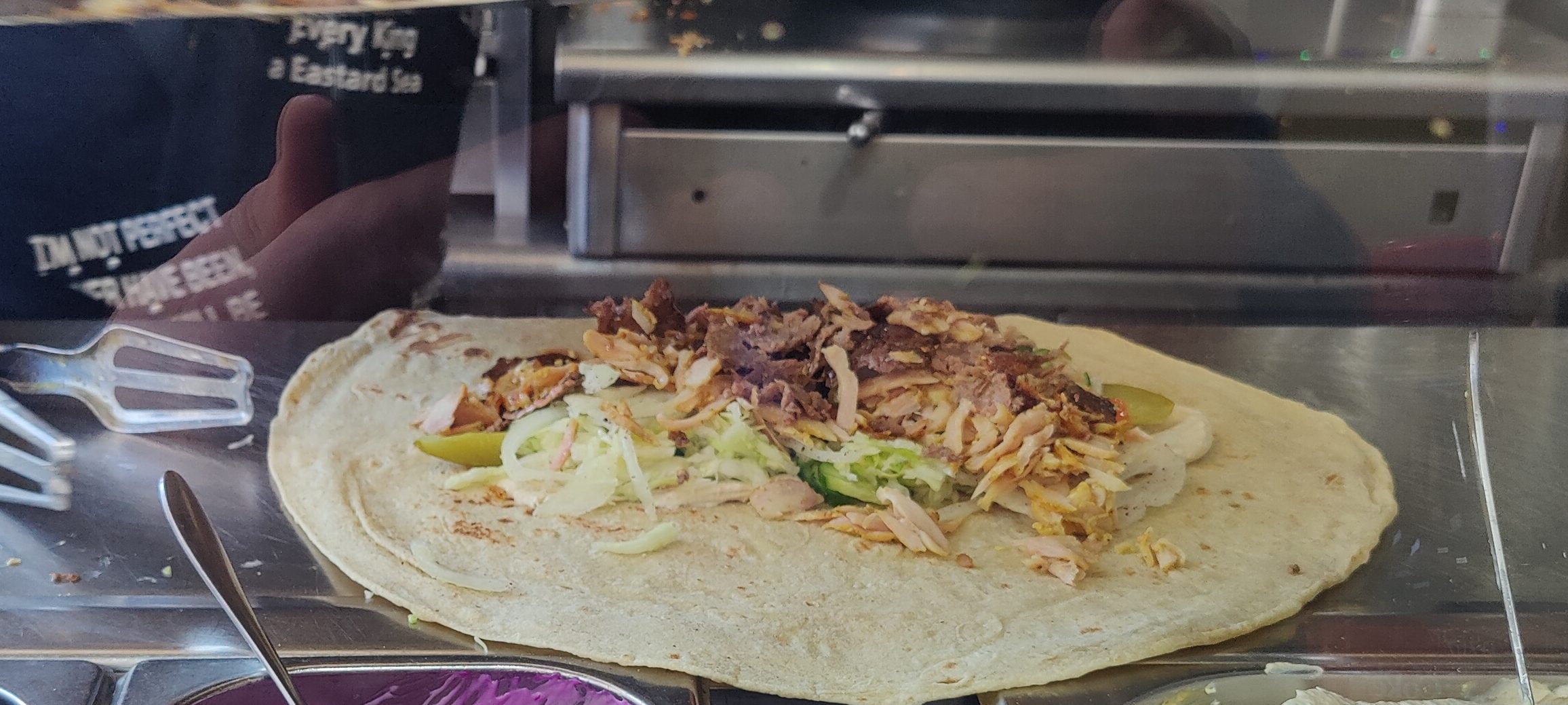

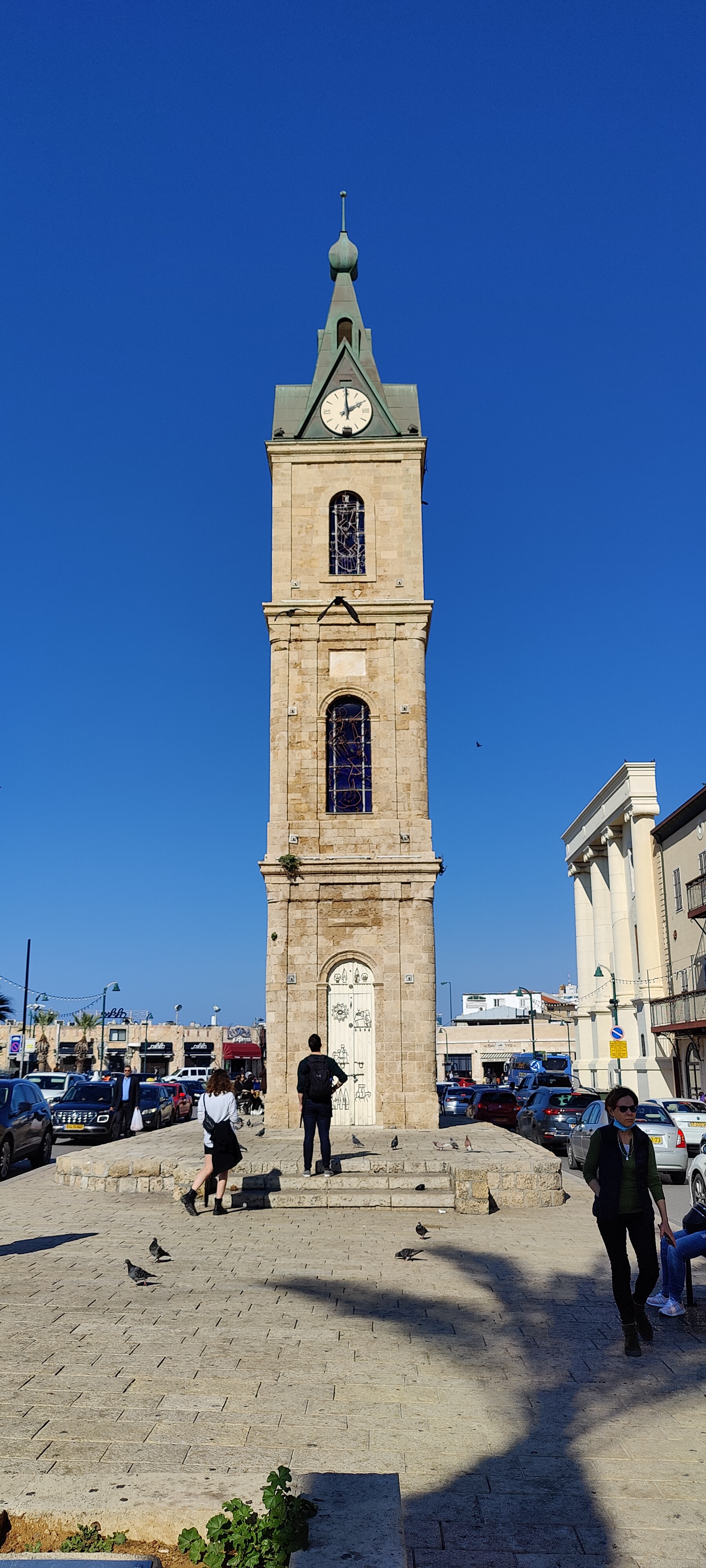
After the bike tour I went back to Jaffa to have lunch and walk the streets some more. There was a free walking tour advertised at 2 PM going around Jaffa but I guess somebody forgot to tell the guide that. There were some people there waiting by the Bell Tower but no one showed up. So I went by myself and found again some of the sites that the guide had recommended. I bought a wrap of hummus, peppers and different kebab meats that were so big that I left half of it for later. Another goal was to find the Almahdi Sweets store again and get their special dessert. They had as far as I could see only this one item on the menu. Doing the one thing from the morning to the evening, day in and day out might get a little boring? Who knows…at least it was one of the sweetest things I had ever tasted and it was delicious.
SUNDAY
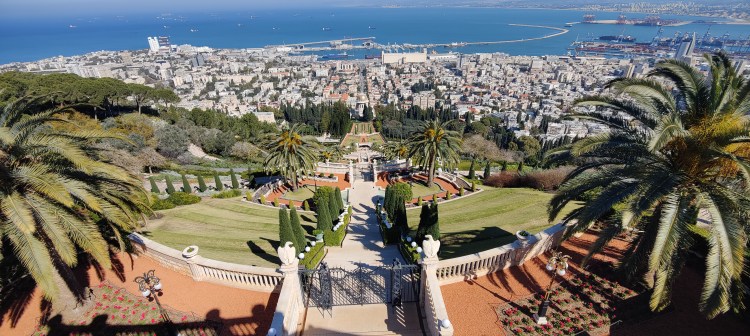
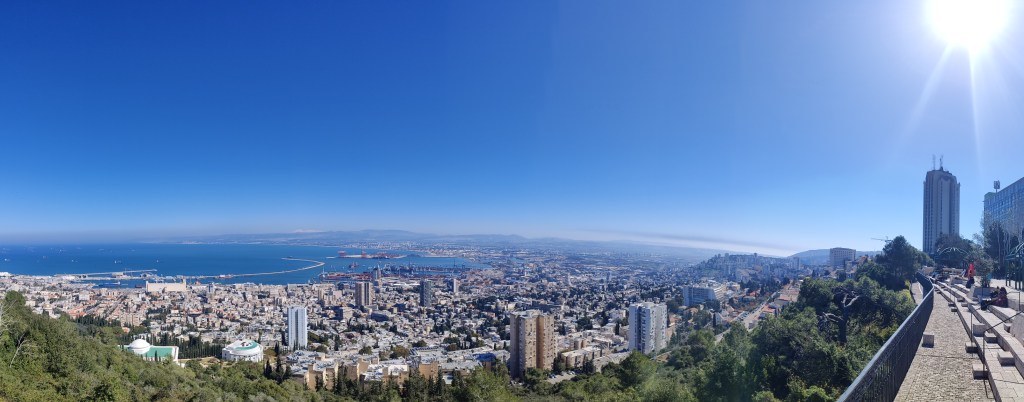
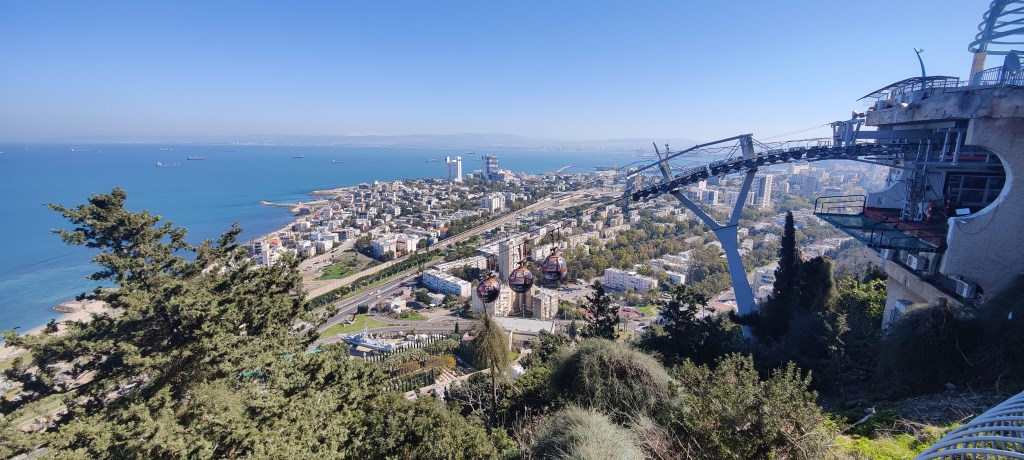
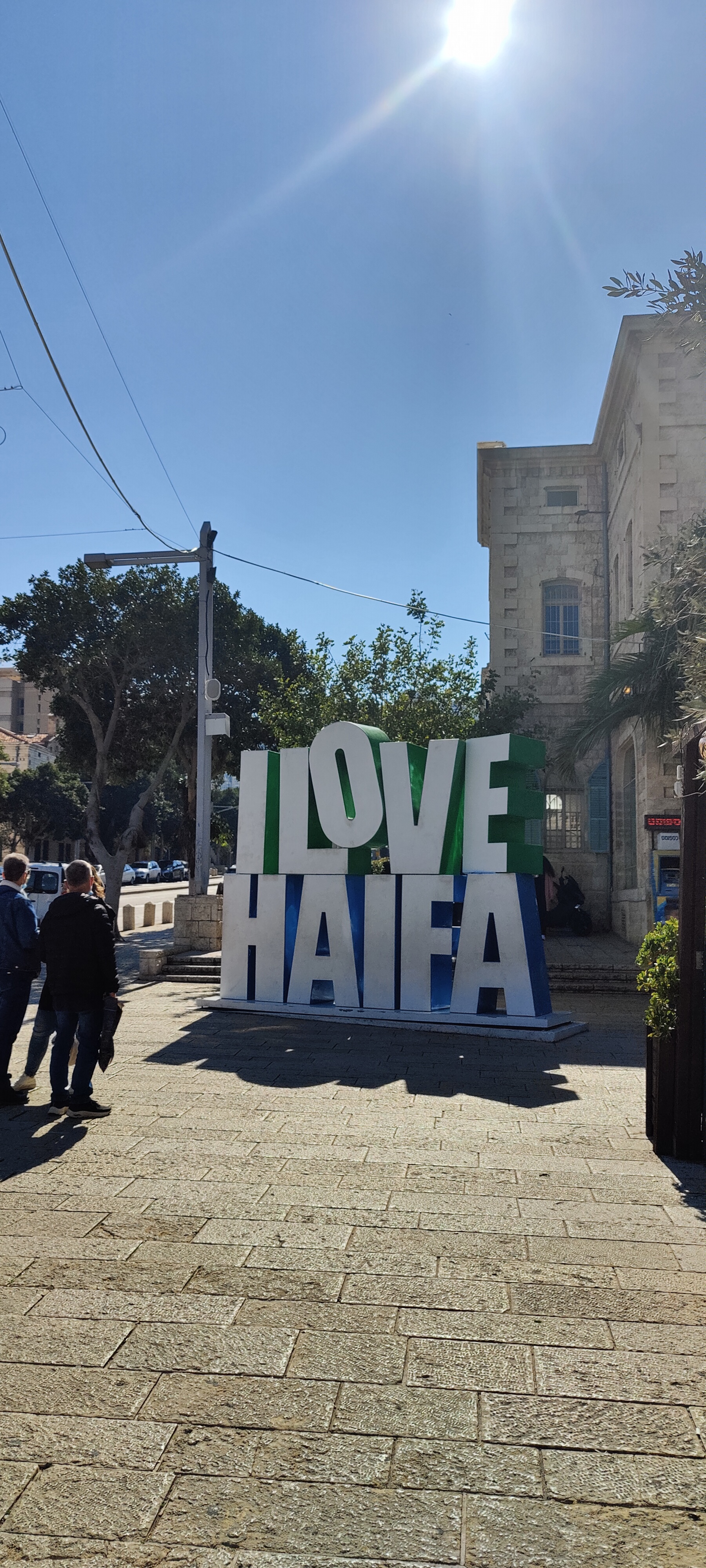
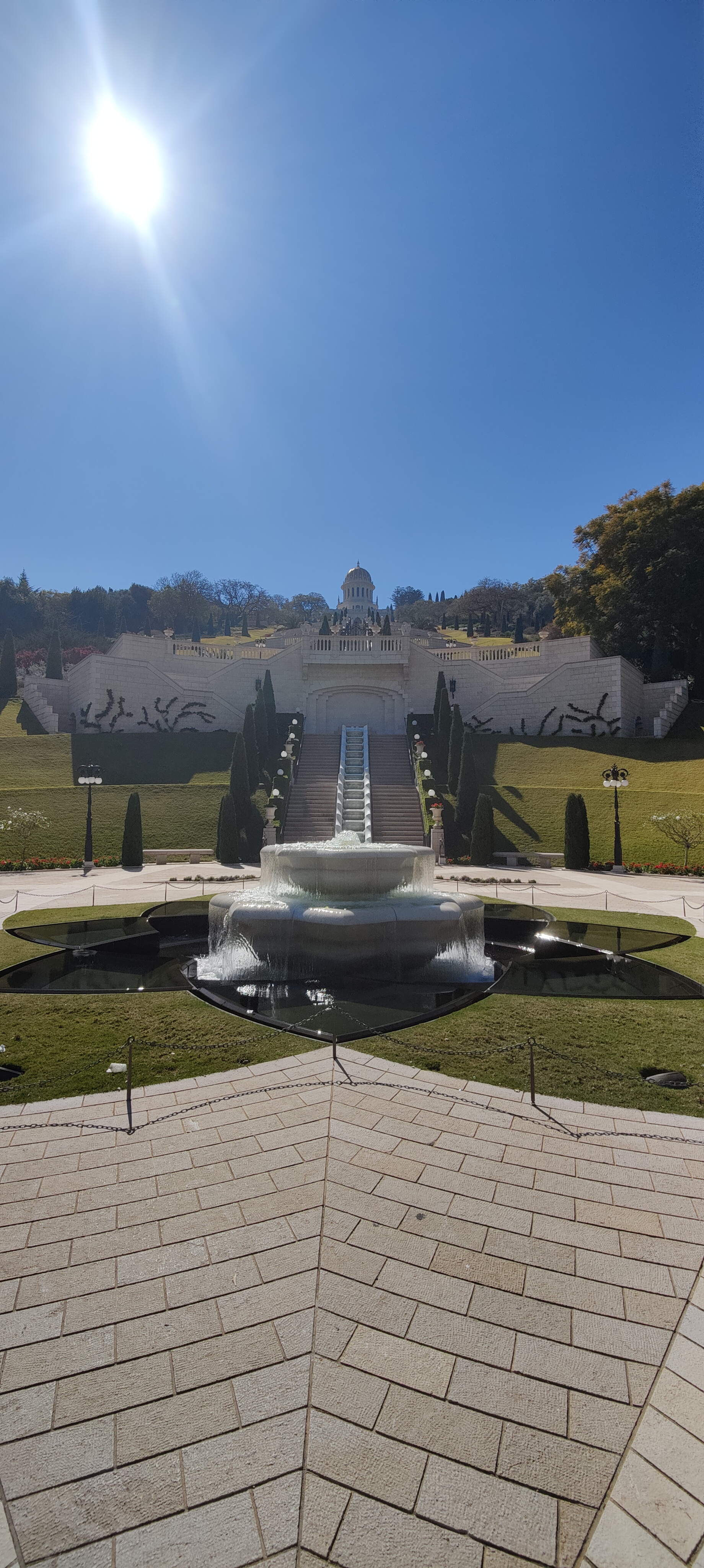
Trains, yippee! The plan was to take the train to the northern part of Israel and visit the towns of Haifa and Akko (or Acre in some versions). It took about an hour to reach Haifa. The train was full of military personnel, mostly young cadets. Some with assault rifles on one shoulder and a huge bags on the other. The main attraction in Haifa is the Baháʼí Terraces, or the Hanging Gardens. It is basically a religious site including 19 terraces and more than 1,500 steps ascending the mountain. Mount Carmel is the main culprit there and the beautiful park is now a Unesco heritage site. To get there is another matter. I have never seen a tourist attraction that is so difficult to reach (being in the centre of a town). To start with I had a brilliant plan to attack the park from above and walk through the park down to the centre of Haifa again. Let’s just say the plan had some flaws. The first was that the Mount Carmel was more of a mountain that I was expecting. I was happy to see that there was a cable car ride that took you up the hill. I naturally took it expecting it to reach the monastery that was supposed to be just next to the gardens (according to some ancient texts). It wasn’t that monastery, but a different one. So to reach the upper terraces I had to walk another 3 km up the hill. It was nice cardio though, about 5% incline and 40 minutes in a row. When I finally reached the summit then the view was worth it. There is a Balcony up there with a view of Haifa and the gardens. Plus three guards who are interested in what’s in your backpack. After the pictures, I was ready to take the beautiful pathway
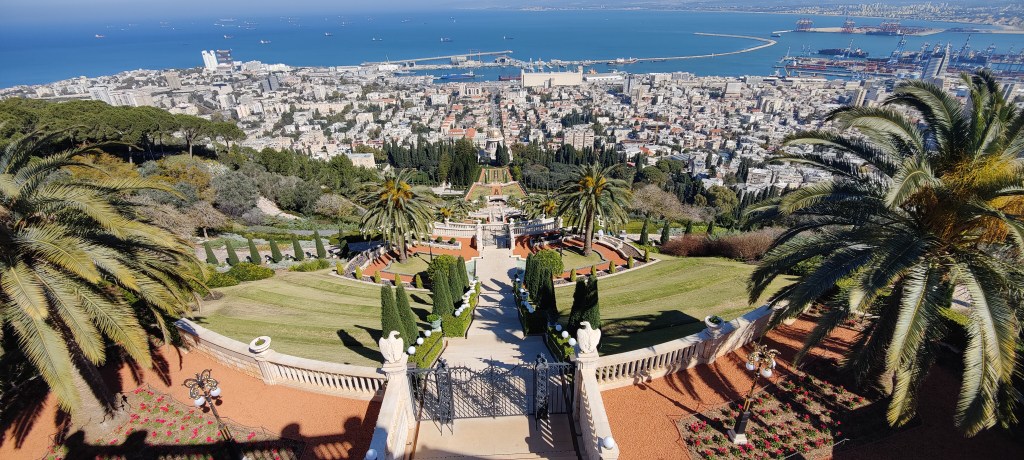
down. That didn’t happen. It turned out that You are not allowed to do that. The guard directed me down the same road I walked up before and turn back after a kilometre or so. Google Map showed there another entrance to the park. Which was also closed. Another dead-end. The third road took me finally to an open gate. This was for the tours in the garden. In Hebrew. Finally, I just took the quickest street down the hill and reached the main gate on the base of the park. Closed. With some people taking photos through the iron bars.
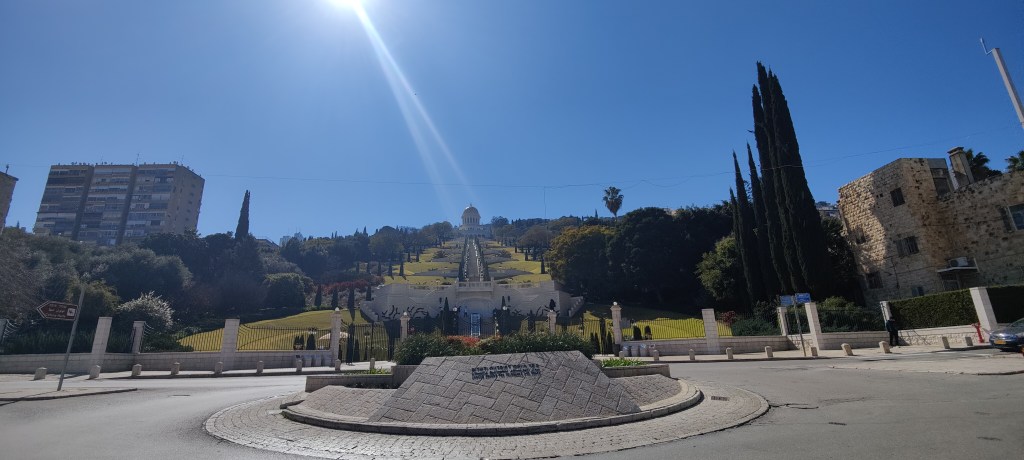
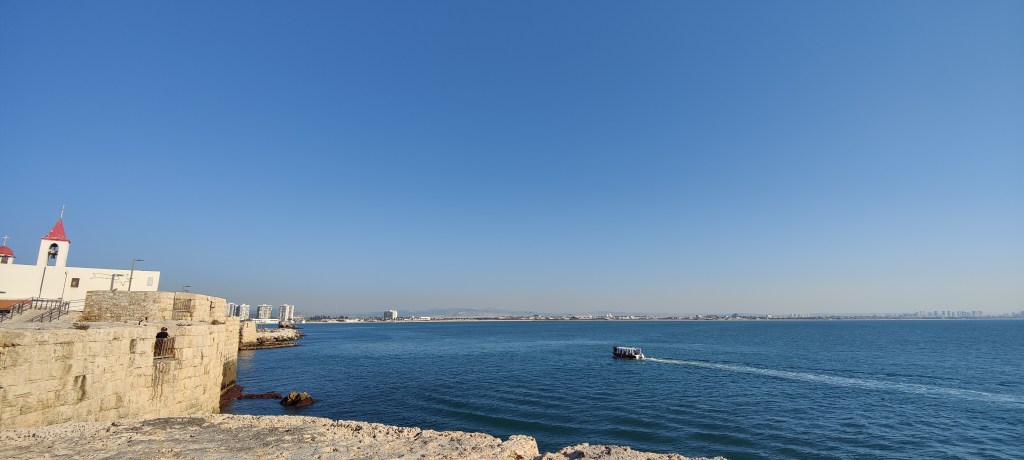
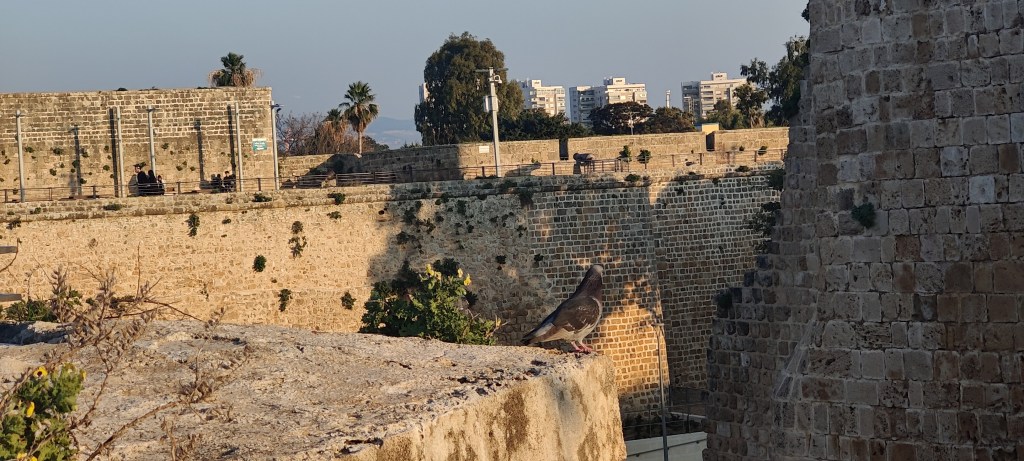
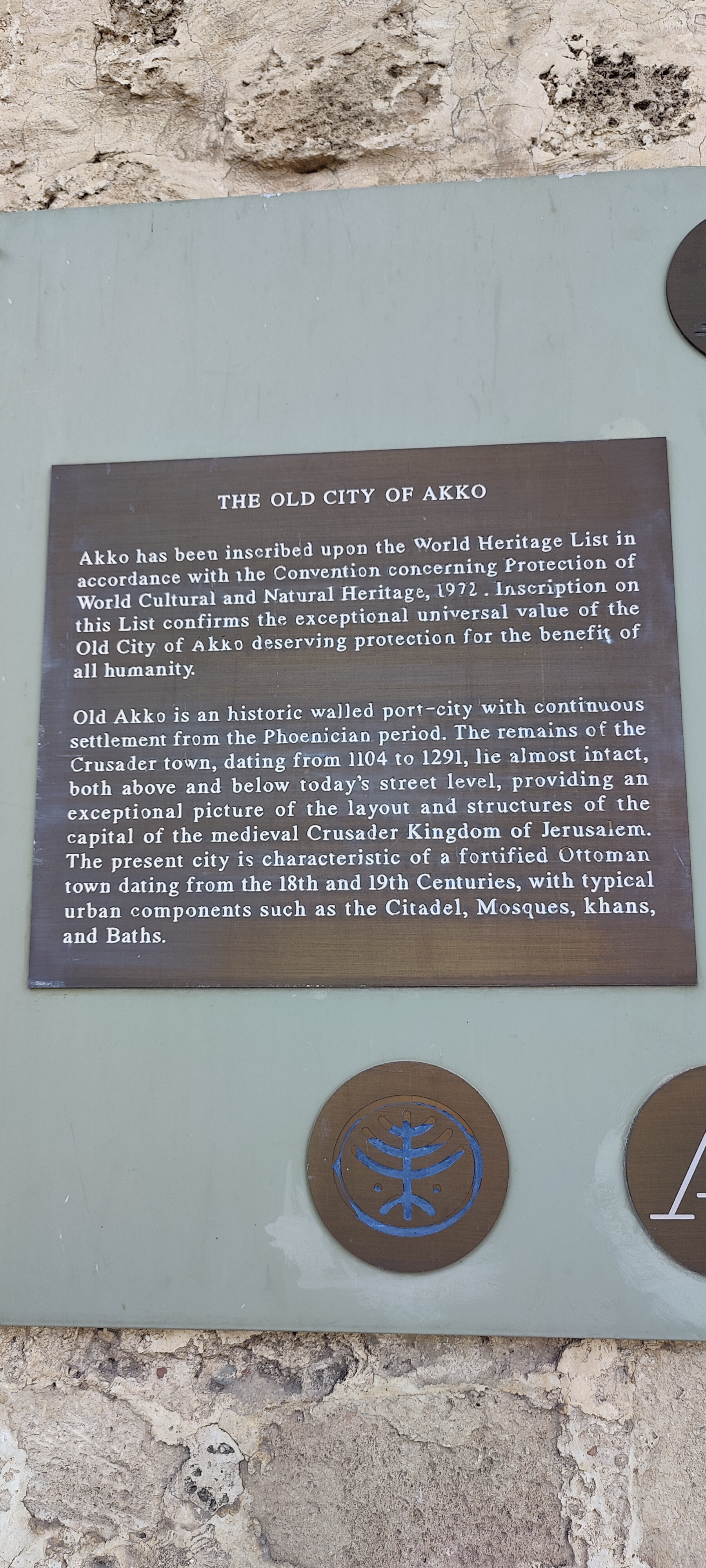
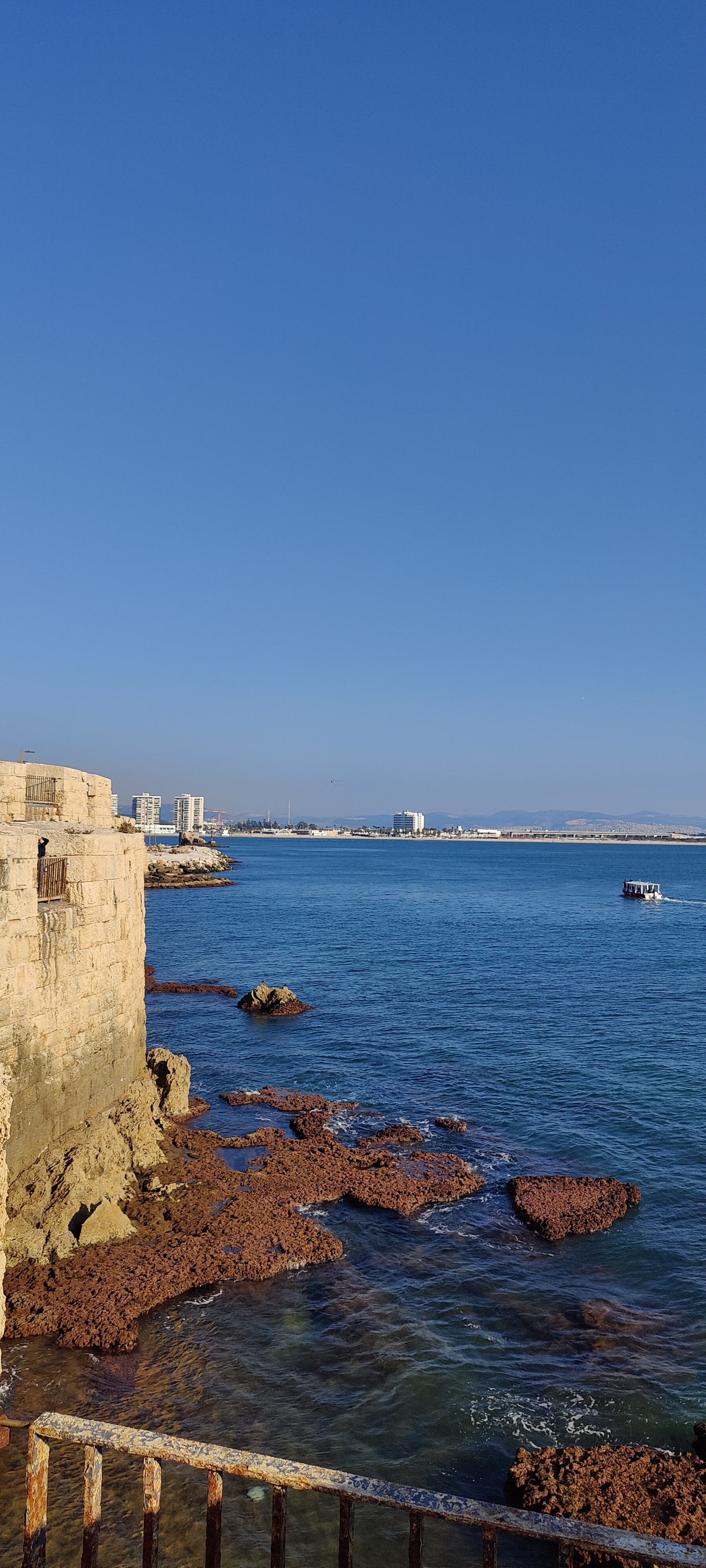
I opted for lunch instead. A much better plan. Had some falafels with spicy hummus, salads and fresh French fries. That was basically the end of Haifa. Nothing more to do there. Not for me anyway. Went to the closest train station and took another train to Akko. Their main attraction is the Old Town and its templar history. Old Akko is a historic walled port-city with continuous settlement from the Phoenician period. The remains of the Crusader town, dating from 1104 to 1291, lie almost intact, both above and below today’s street level, providing an exceptional picture of the layout and structures of the capital of the medieval Crusader Kingdom of Jerusalem. The present city is characteristic of a fortified Ottoman town dating from the 18th and 19th Centuries, with typical urban components such as the Crusader Citadel, Mosques, and Turkish Baths. All closed thanks to Covid. The old town was walkable of course, all the way to the old port and lighthouse by the sea. More cats on the streets than tourists. After a few hours there it was time to go back to Tel Aviv. Took the train at sunset and after about 2 hours and 30 000 steps later I was back in the apartment.
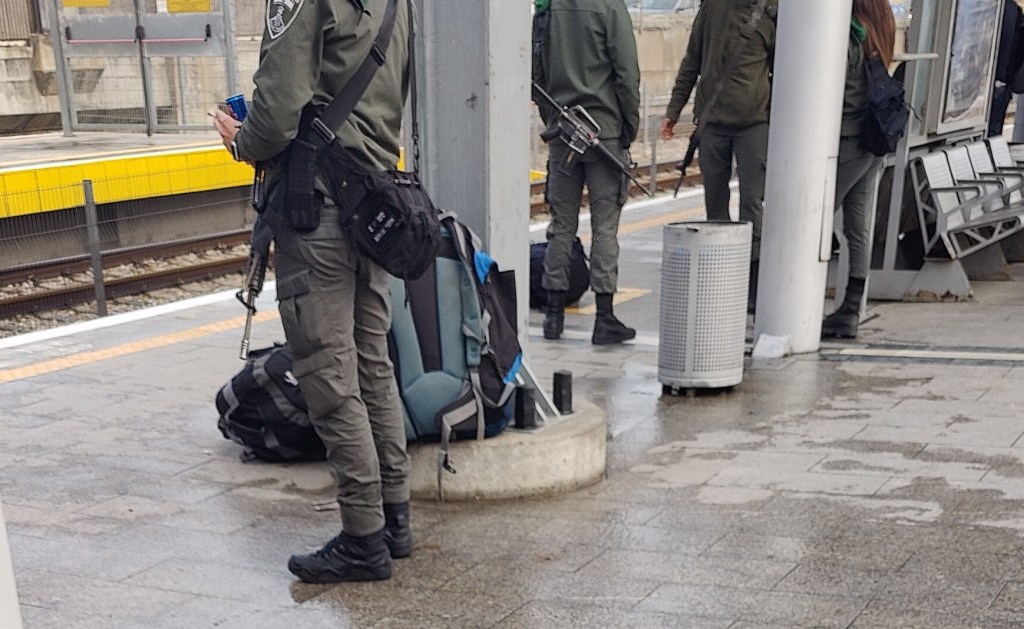
It’s maybe a good moment to summarize some things I have noticed on the streets of Israel so far. The cars are rather smaller than bigger and usually scratched at least from some corner. The drivers favour horns to turn signalling lights, but the pedestrians still have always the right of way. The streets are filled with garbage and all the houses have been covered with graffiti. Some graffiti in Jaffa was actually quite nice but most of them are the same kind as everywhere else in the world. There are a lot of cats on the streets, mostly not healthy looking and I’m pretty sure I saw one that was dead or just completely wasted and sleeping it off. All the malls, train stations etc have guards sitting there and checking your bags (for weapons most likely) but at the same time, the streets are filled with young soldiers carrying rifles with them everywhere. Go figure….
MONDAY
Jerusalem. Capital of Israel. At least that’s what the locals think. For the rest of the world, Tel Aviv is working as a capital. It’s because of the long-lasting dispute with the State of Palestine. While Israel’s claim to sovereignty over West Jerusalem is more widely accepted by the international community, its claim to sovereignty over East Jerusalem is regarded as illegitimate, and East Jerusalem is consequently recognized by the United Nations as Palestinian territory that is occupied by Israel since 1967.
Train from Tel Aviv goes there once every hour. The day started cloudy with a chance of rain. Which luckily didn’t arrive. I started the day from Yad Vashem – The World Holocaust Remembrance Center, which is located just a bit outside the city centre at the end of the tramline. I was very interested in how this topic is presented in Israel. It turned out to be a really well-made exposition covering the holocaust from all the different perspectives and locations worldwide. It’s a quite big place with a huge collection of stories, items, photos, videos and artefacts. To my surprise, the first story in the exhibition was about what happened to Jews from Vilna Ghetto in Klooga, Estonia. It took me close to 2 hours to go through the museum. Some stories are too emotional and heartbreaking to get into here. It is however a very important job to do there – remembering so that hopefully it won’t happen again. There were a lot of people there, some individually, some with big groups, even some schoolchildren on a study tour.
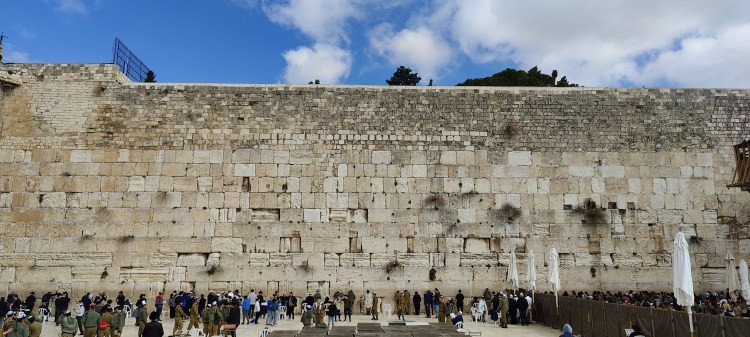
After lunch in the city centre, I entered the Old City. It has some special vibe going on there. Since the 19th century, the Old City has traditionally been divided into four uneven quarters (Jewish, Christian, Moslem and Armenian). There are several sites of key religious importance in the Old City, including the Temple Mount – Judaism’s holiest site and the third holiest site in the world for Islam (after Mecca and Medina). Not so easy to access there. Only at certain times a day. For Muslims Temple Mount can be accessed by 11 gates in the Old City of Jerusalem but tourists and non-Muslims are only allowed to enter through the Moroccan Gate which is also known as Mugrabi Gate. I got the time right but chose the wrong gate and was turned away by some security in the Moslem quarter. Instead, I found the way to the Western Wall. The holiest praying site for Judaism, because it is the closest place to the Temple Mount where Jews are not recommended to go there…there is actually a Jewish law that forbids Jews from entering the site so they don’t set foot on the “Holy of Holies”, located where the first two temples stood.
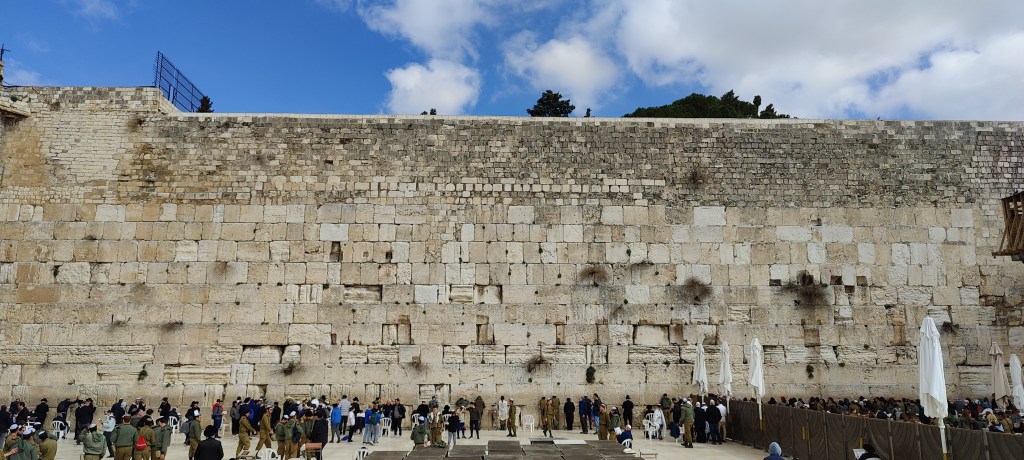
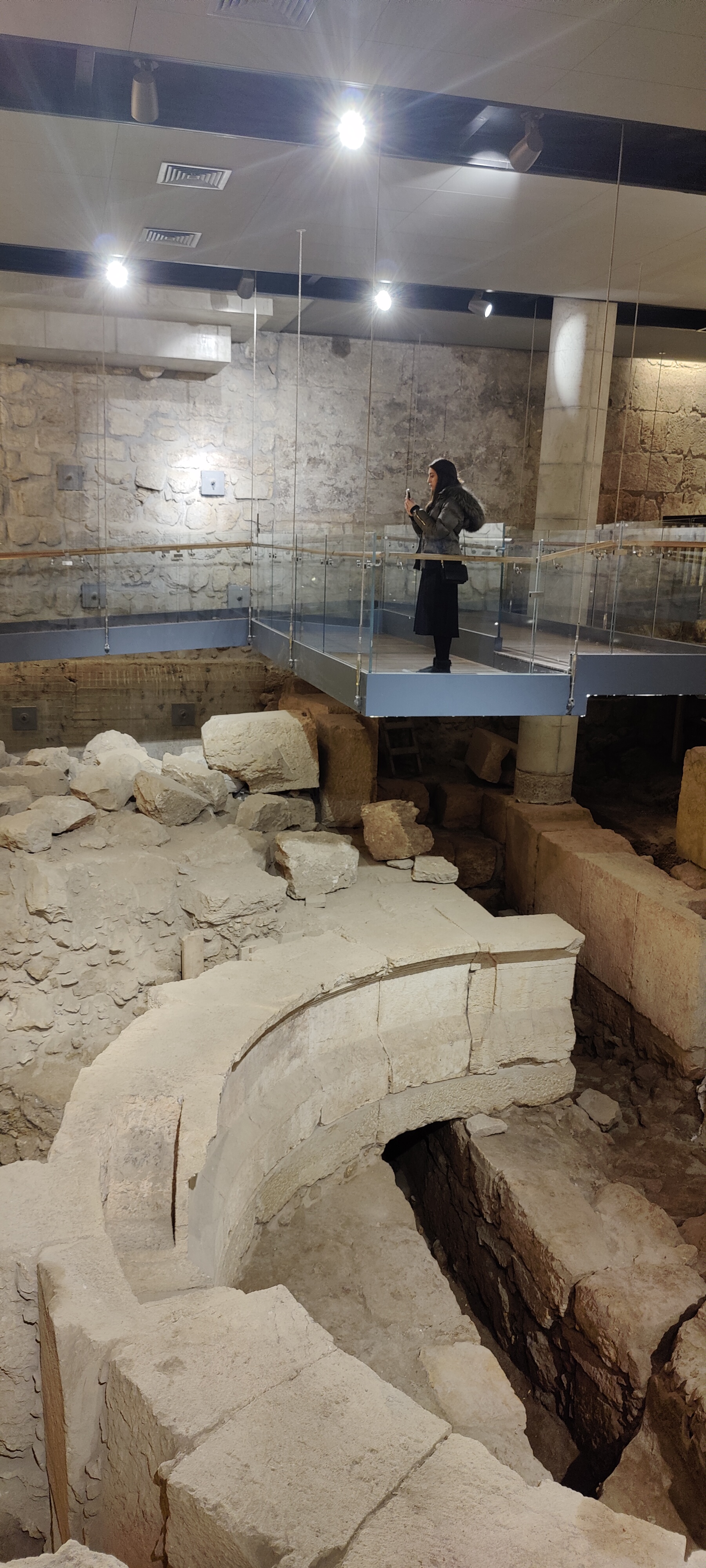
While there I found the Western Wall Tunnels. There are archaeological excavations going on underground and some of it is open to the public as a tour. The next tour was in 1,5 hours, so I made a quick online reservation, got the ticket and went for a walk around town. Especially along the Via Dolorosa, which is a pilgrimage processional route in the Old City of Jerusalem. It represents the path that Jesus would have taken, forced by the Roman soldiers, on the way to his crucifixion. The Via Dolorosa is not one street, but a route consisting of segments of several streets. At the end of the route, I naturally found the Church of the Holy Sepulchre, which is a church in the Christian Quarter. According to traditions dating back to the fourth century, it contains the two holiest sites in Christianity: the site where Jesus was crucified, at a place known as Golgotha, and Jesus’s empty tomb, where he is believed by Christians to have been buried and resurrected. After that, it was time to return to the Western Wall and wait for the access to the tunnels. The security guard already remembered me and let me through without searching my bag again. Nice to be remembered. The tunnels are something they are still excavating and for now, they show what they have found during the past 10 years, which is a very short time in archaeology. Mostly aqueducts, fountains, water reservoirs, religious baths and some stuff they still don’t have any idea what that might be. They have also excavated part of the western wall that has never seen the light of day since 2000 years ago when it was constructed.
The day was coming to an end and I decided to return to Tel Aviv. Took a bus that should have taken me to the train station with a lot of time to spare but then I saw a traffic jam like no other. It took basically 15 minutes for the bus to go from one stop to the next. Once I was close enough to the light rail/tram line I switched over with the hope that I still could make the train on time. I arrived at the train station at exactly the same minute the train left the station four very long escalators away underground. So suddenly I had an hour to spare. Decided to spend it on dinner. Found a street food stall a few meters away, which served some local type of food consisting of pita bread stuffed with potatoes, boiled egg, salats, hummus etc. It was delicious as all the food in Israel has been so far. Even the burger with fries I had for lunch was simply smashing. Listening to the street musicians and eating my dinner was a nice way to wait for the next train. There is good in everything that happens. Just find it.
TUESDAY
Masada, Ein Gedi, and The Dead Sea. Woke up at 5 AM because the tour started already at 6:30 in the morning. Unfortunately, some alarm outside the apartment woke me already at 4:45. Took a Lime scooter through the empty city to the tour starting point and went on my first big bus tour in a while. First, we drove to Jerusalem and picked up some more tourists from there. After that continued on over the hills to the lowest area in the world around the Dead Sea. The first destination was the fortified hill on Masada. A place that was very important in Jewish history about 2000 years ago. Now it’s a national park on Unesco’s heritage list. From afar it’s just another part of the mountain. On closer inspection the now in ruins fortress contained storehouses, barracks, an armoury, a palace, and huge cisterns that were refilled by floods. In order to inspect it closer, you can take the winding Snake Path up the hill, which looked like a really terrible idea. The much better option is the cable car. Up on the plateau, it’s like any archaeological site with a lot of rocks. But a guide with the stories makes the place come alive. If that doesn’t help then you can always find the movie called Masada (1981) that is filmed in the same location with Peter O’Toole in the leading role. It was really hot and sunny up there so staying in the shade and drinking water is a must.
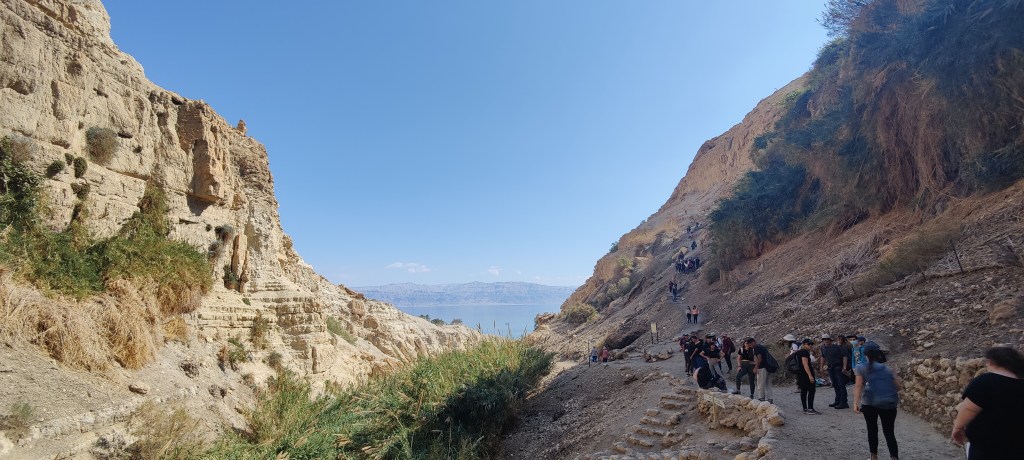
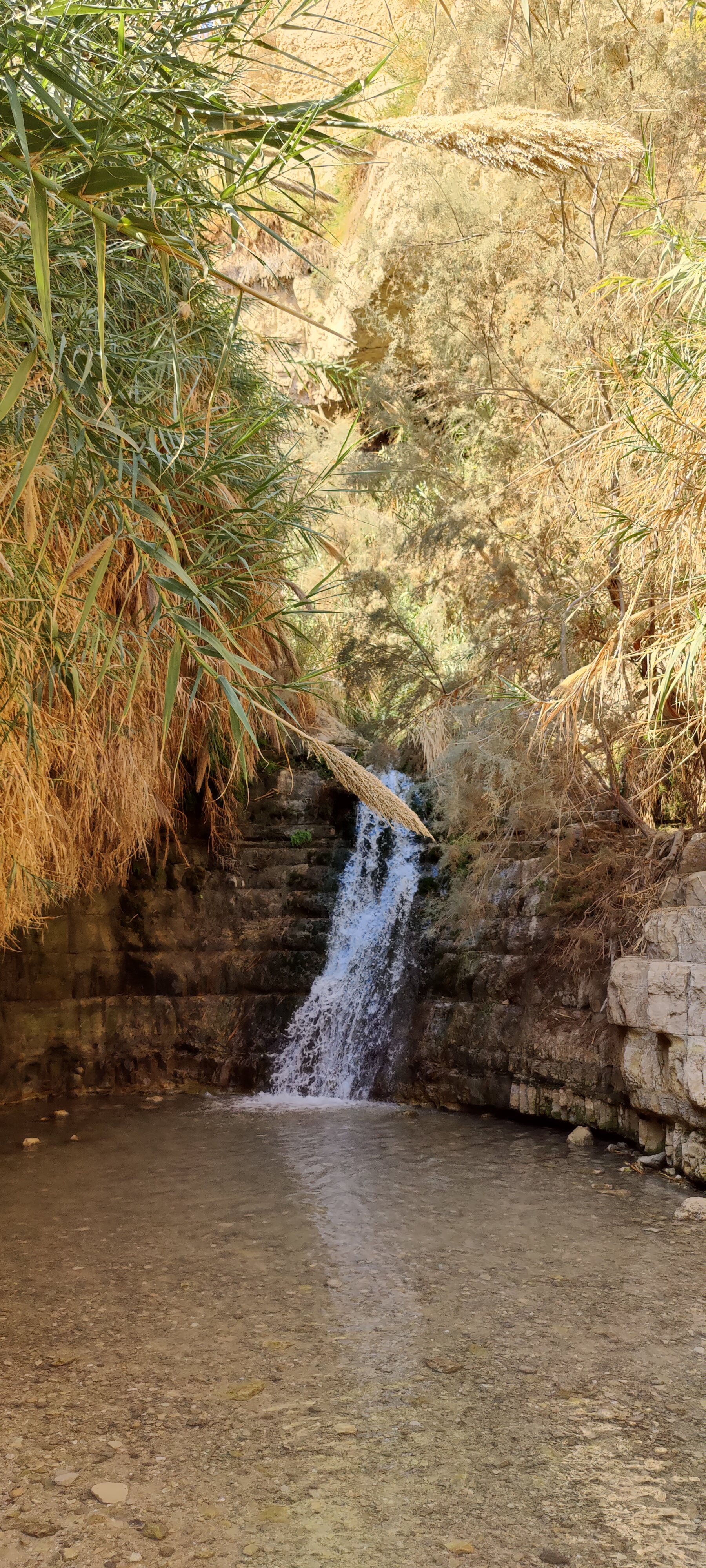
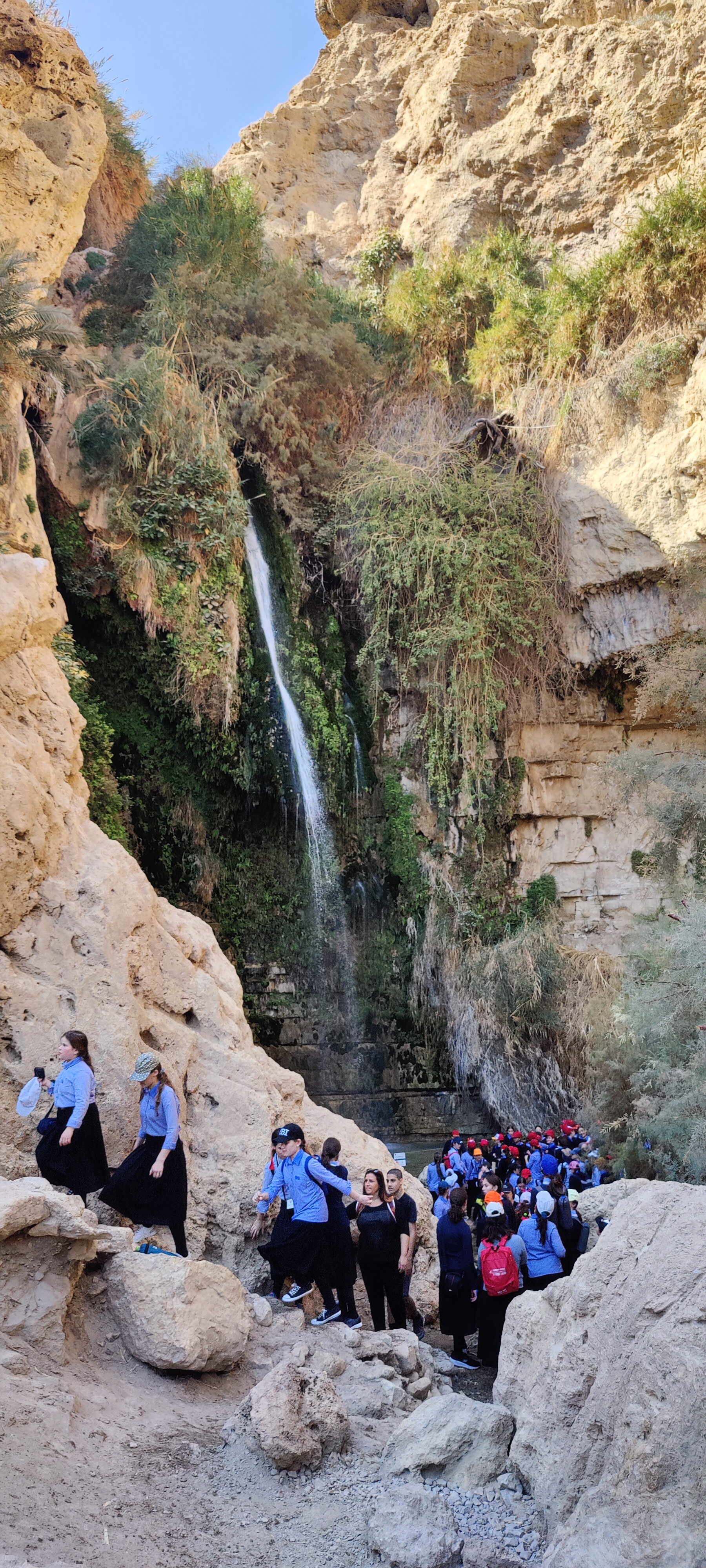
The next destination on the tour was the En Gedi Nature reserve. En Gedi is the biggest oasis in Israel. In the middle of the desert, just off the Dead Sea is a green area, which has springs and waterfalls, and flowing brooks at the foot of the cliffs. Something surreal compared to everything else that surrounds it. In one hour it’s possible to walk by some small waterfalls to the Waterfall of David. That is the most accessible even though it requires climbing some really steep natural stone staircases and going through some tunnels carved by the streams that flow through it. The waterfall itself is really narrow but nice. The local schoolchildren on the field trip were really ecstatic. I have never seen so many school groups in one place before. There are a few other springs and trails but these would take a better part of the day to explore them all. It was worth the trip as it was anyway.
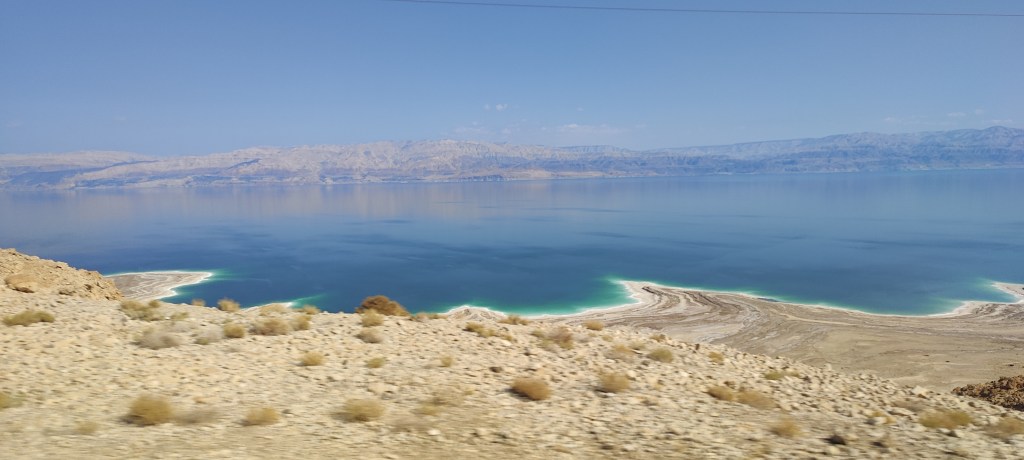
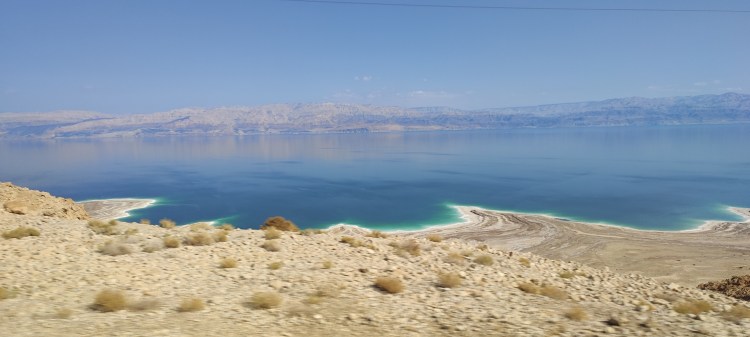
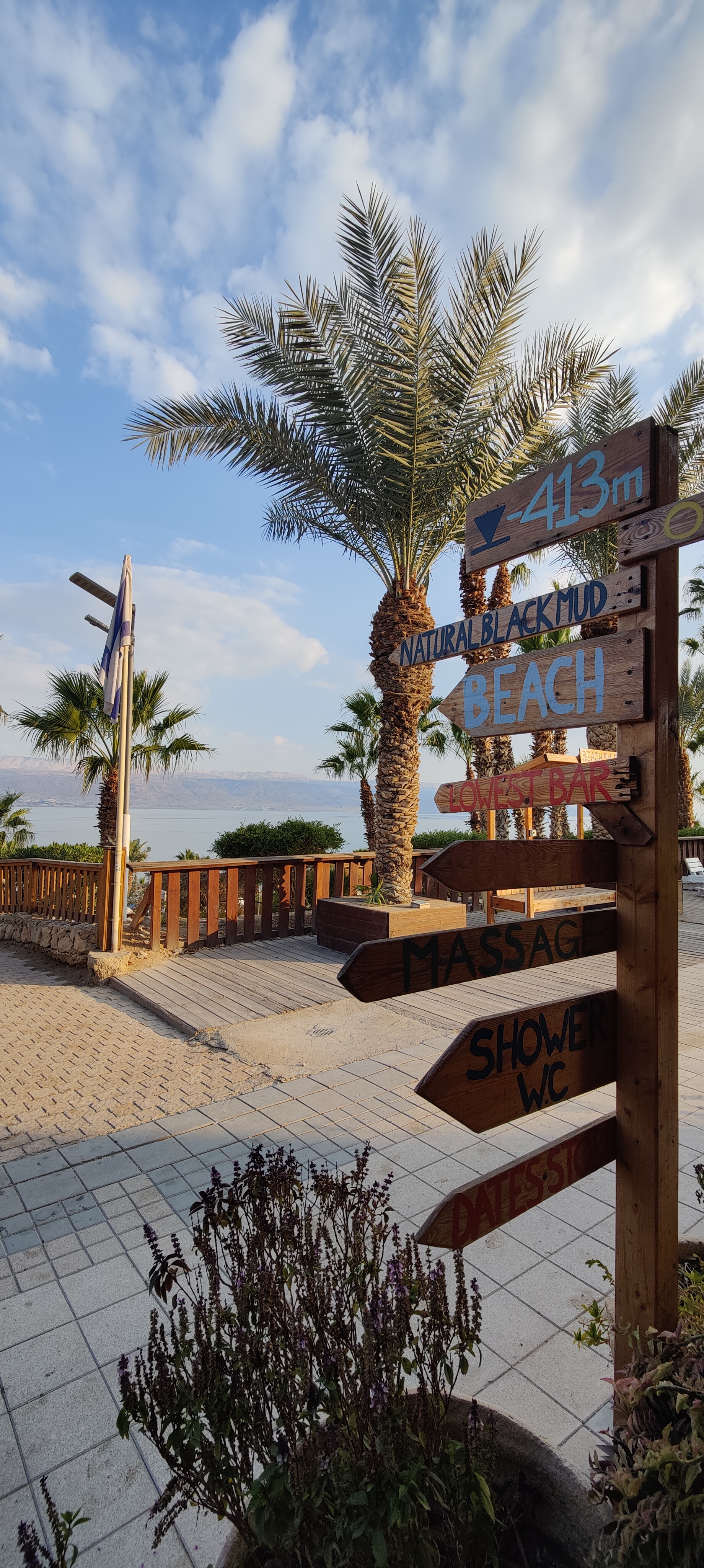
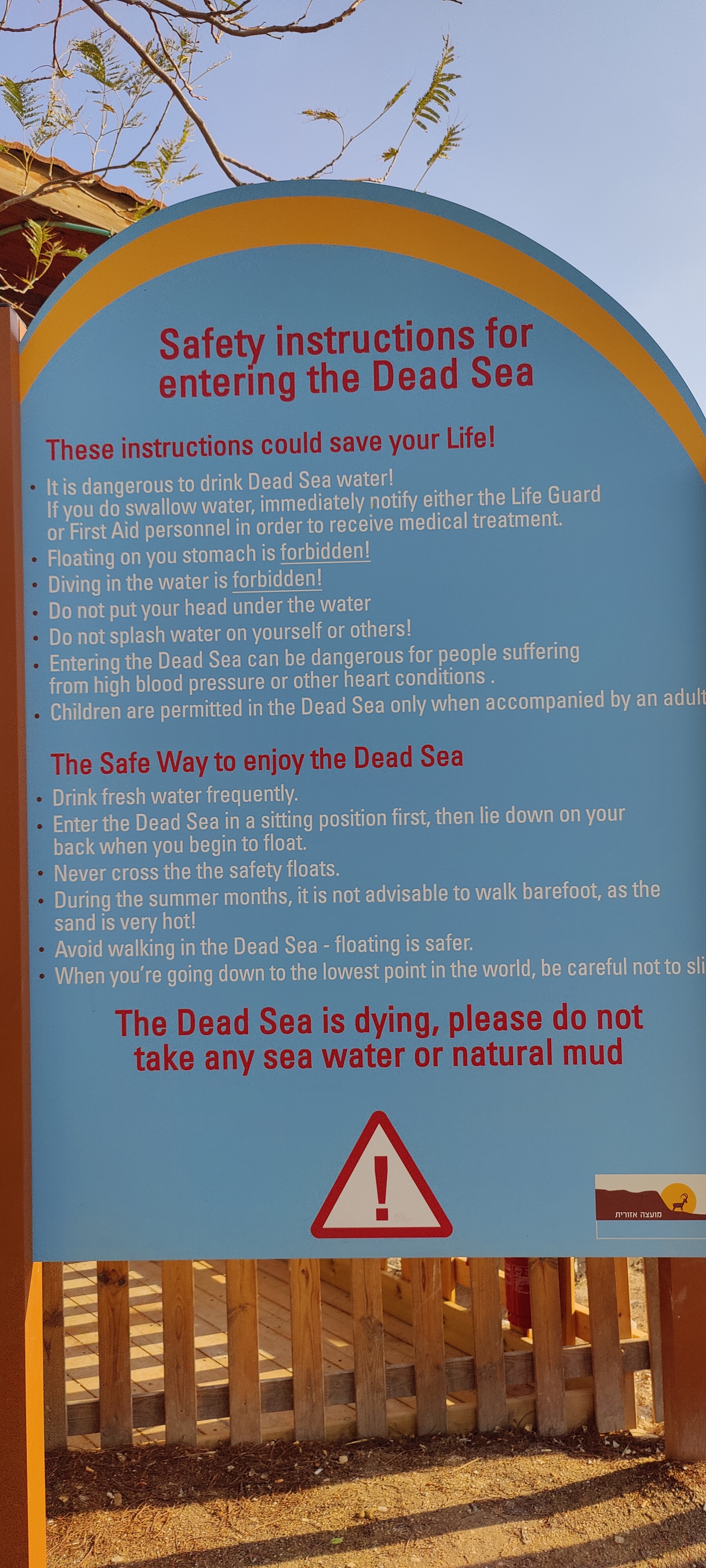
The last stop of the tour was the Kalia Beach on the top of the Dead Sea. Located 413 metres below sea level the resort also has the lowest bar on earth. But that’s not important. What is important is access to the Dead Sea – one of the world’s first health resorts. The Dead Sea is receding at a swift rate and one day it might not be there anymore. Just like the Aral Sea, which has completely disappeared. Its unique saltiness, 10 times more than in an ocean, makes swimming there a pretty strange experience. You are like floating on the surface unable to sink lower. So cover yourself with the local mud and do just that…float in the sun and remember that floating on your stomach is forbidden.
WEDNESDAY
Back to Jerusalem. Or so I thought when waking up this morning. During my morning coffee, I realised that one of the sights I planned to visit there was closed today and I could take the tour only on Thursday. That was enough to change my plans and take a day off instead. Which meant no other plans, no obligations to travel anywhere and no obligations. Well, there was one…I had to make preparations for getting to the Sabbath dinner on Friday. By lunchtime, after writing a nice letter and discussing some logistical details, I had managed to do just that. Looking forward to this special experience.
It was a beautiful sunny day so I decided to go for a walk and try out this recommended restaurant which serves only breakfasts all day long. It wasn’t far away and 1 PM sounded just about the right time to have breakfast. The Israeli breakfast they serve there is more suitable to be called lunch – omelette, creme cheese, feta cheese with dates, some other spreads and sauces (especially one with apple and cinnamon taste), tuna salad and another salad made of different green and red vegetables and peppers. It was the best breakfast/lunch so far.
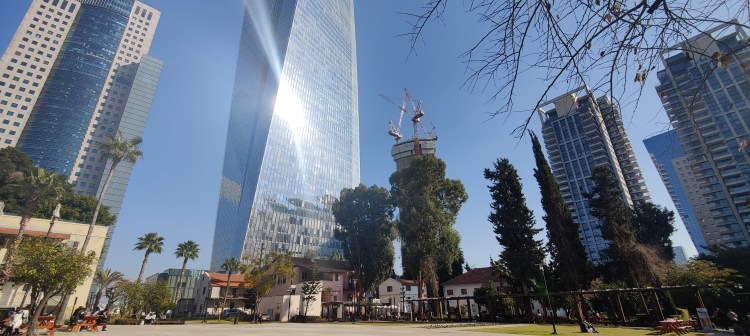
While eating I browsed different Instagram accounts about Israel and found a picture of a location nearby I decided to check out. Sarona is a neighbourhood, which started as a German Templer Colony in Palestine in 1871. It was one of the earliest modern villages established by Europeans in Ottoman Palestine. In July 1941, the British Mandate authorities deported 188 residents of Sarona, who were considered hard-core Nazi sympathizers. By the 2000s, the area had fallen into disrepair and was a haven for drug addicts. However, since 2003, the area has undergone massive renovation, which involved moving and relocating historical buildings before their restoration. The area is now a popular shopping district and a beautiful park in the middle of modern skyscrapers.
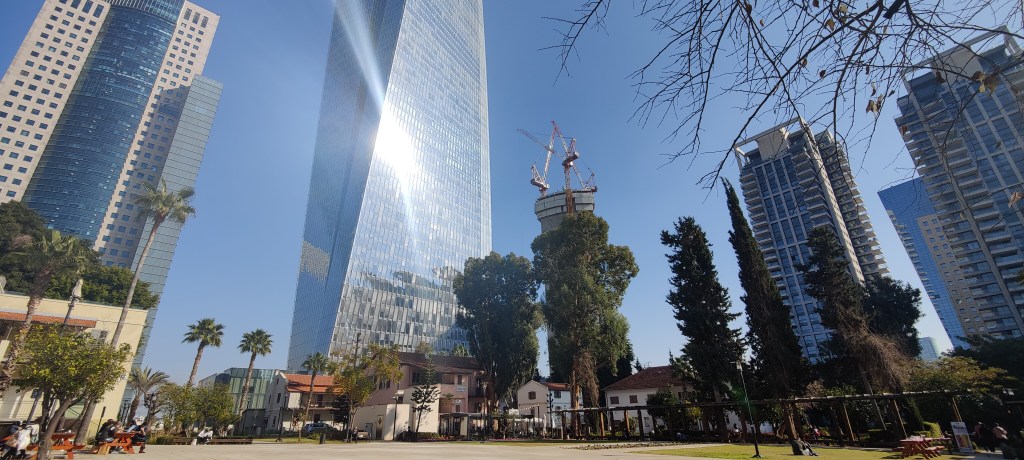
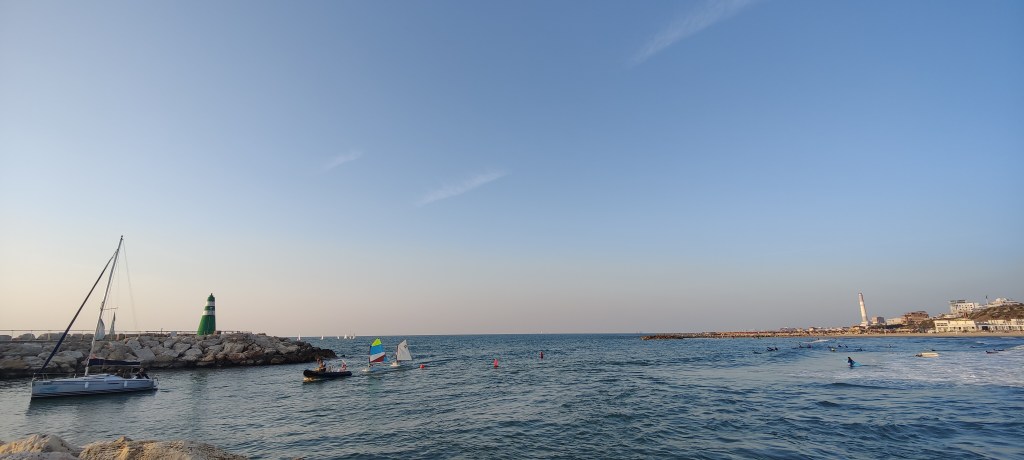
From there I walked through the Dizengoff square down to the beach and had a look at the Tel Aviv (Blue Flag) Marina. It’s on the other end of the 3+ km long area of different beaches and is also popular among the local surfers. Just a few kilometres away is already the end of Tel Aviv.
THURSDAY
Back to Jerusalem. Finally. I had some unfinished business with this city and learned a lot in the process. The first destination was the Temple Mount (or Haram esh-Sharif as it is known to Muslims). For non-Muslims, there are only a few hours a day that this holy site is accessible. My window of opportunity was closing by 10:30. Thanks to the orienteering challenge last time I was here I knew exactly where to run from the train station. On to the tram and then on to the bus that took me to Dung Gate. That name is by the way a very unfortunate example of “lost in translation”. The original name in Hebrew meant something like a “vessel” because there was a pottery market once upon a time. Some translators however managed to turn it into “dung”. Literally. And it stuck.
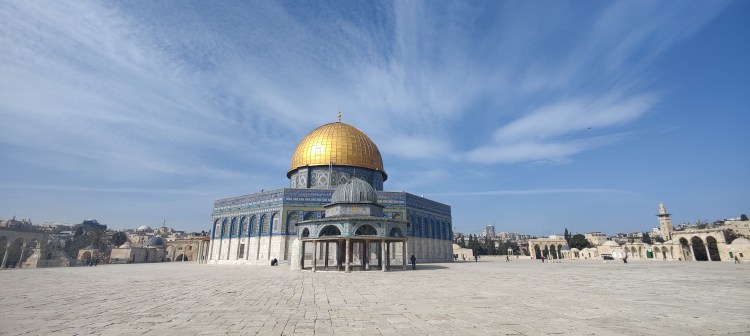
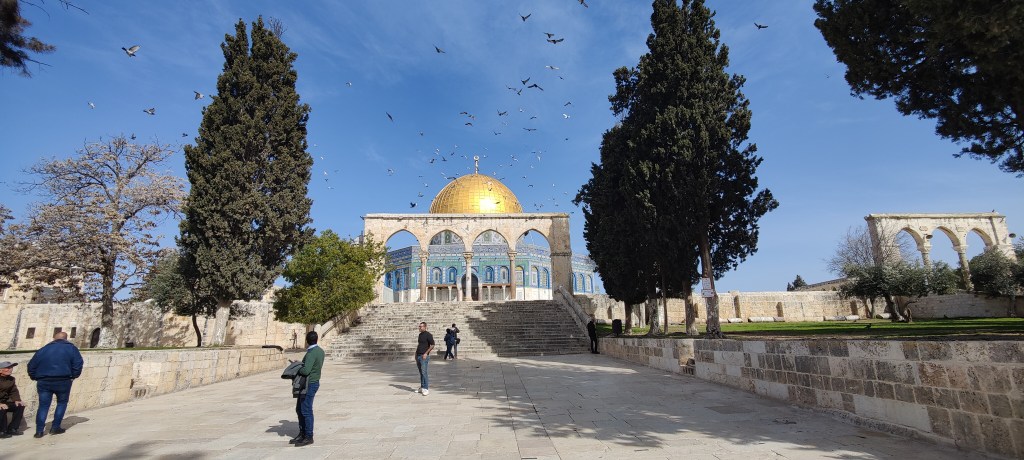
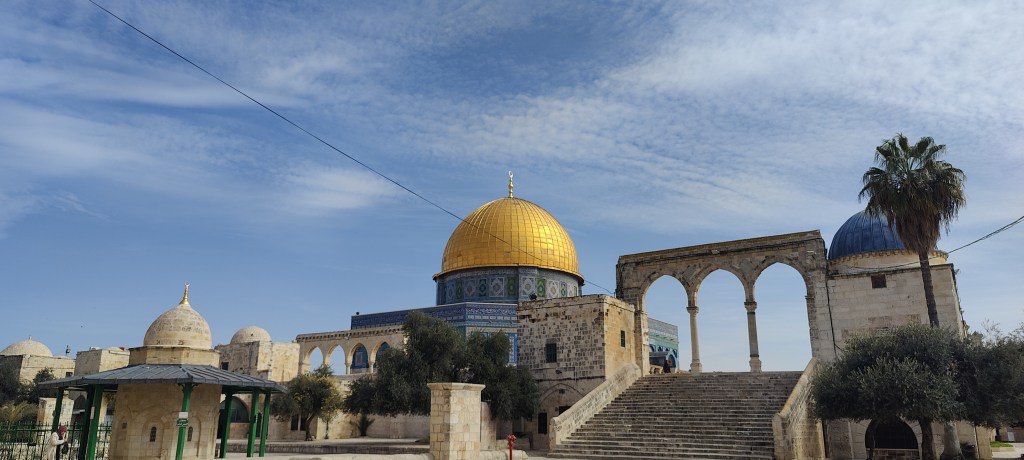
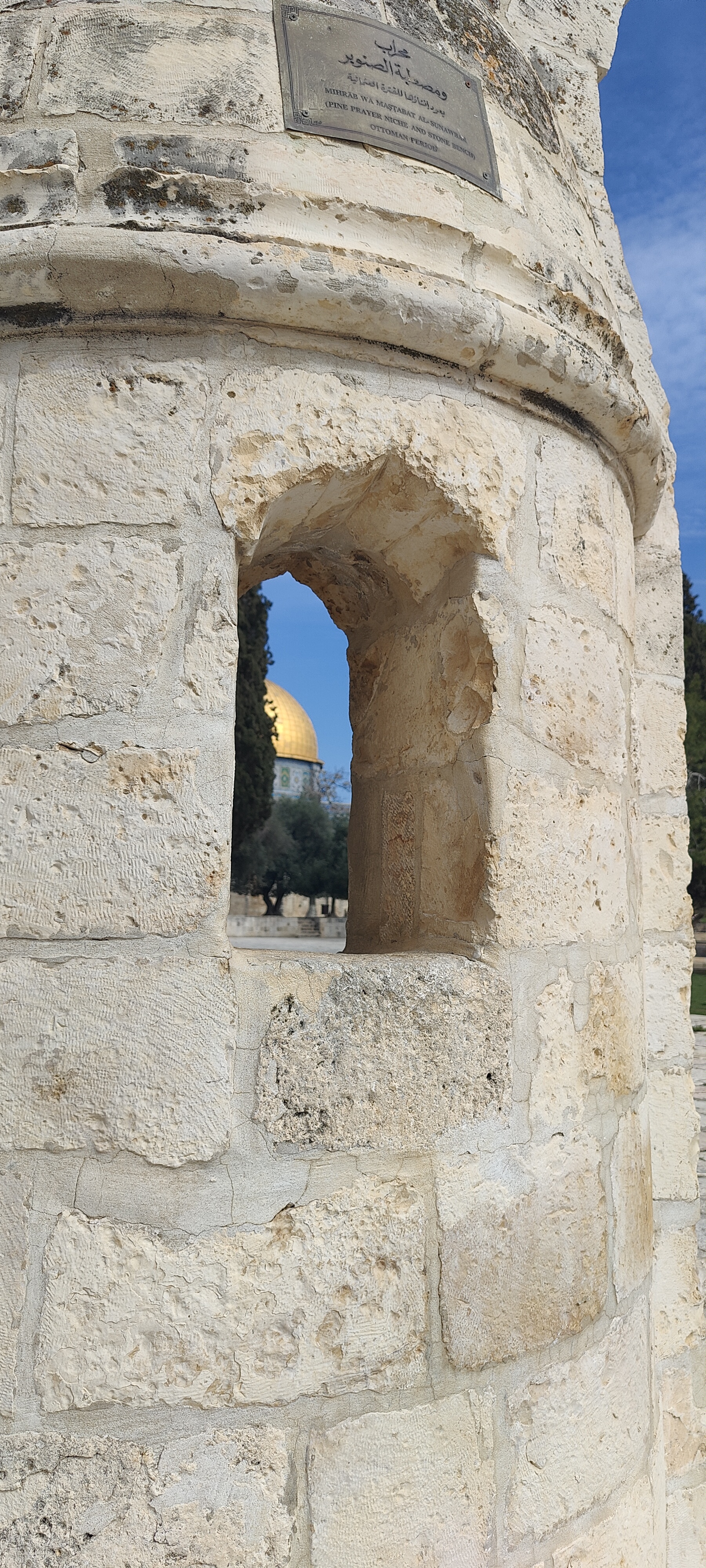
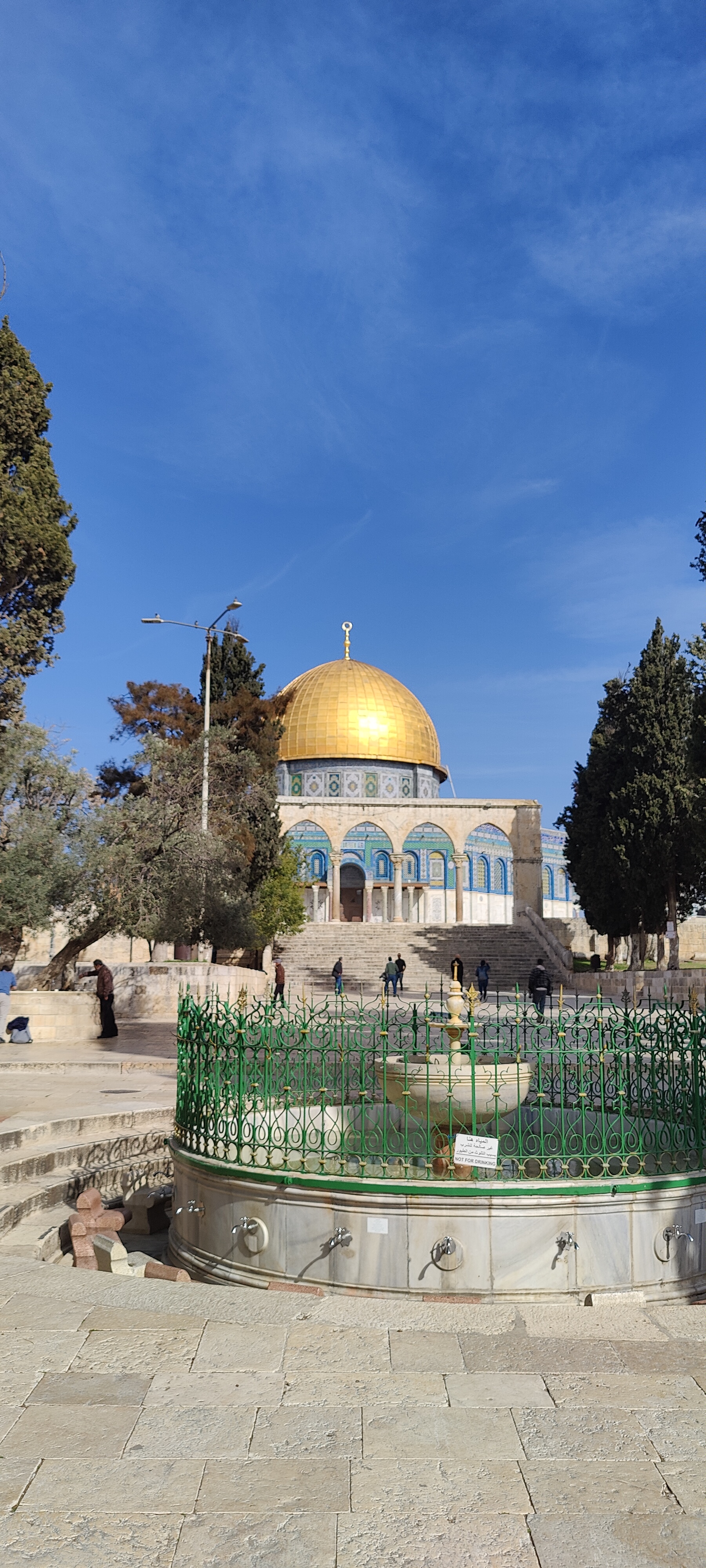
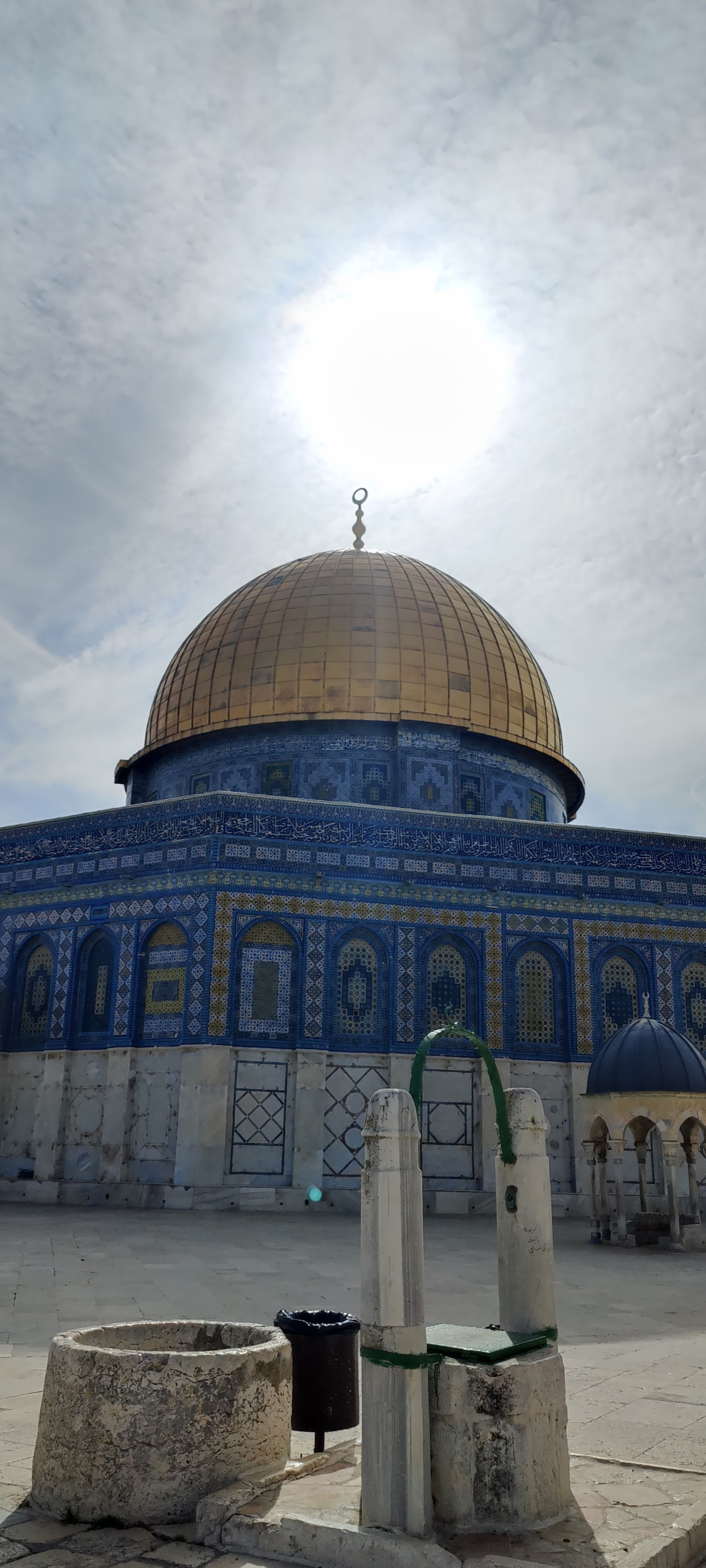
There is a small opening next to the entrance to the Western Wall – one for men, one for women and one for the mount. Without any sign on it. Luckily another friendly guy with a machine gun pointed me to the right opening. The pathway went by the wall and there I was – inside the historically and religiously significant site. And the sun came out. The Temple Mount is surrounded by retaining walls (including the Western Wall) that were built during the reign of Herod the Great for an expansion of the temple. It includes three monumental structures – the al-Aqsa Mosque, the Dome of the Rock and the Dome of the Chain – and four minarets. The Dome of the Rock is probably the most famous of them all it stands by itself on the man-made plateau and its golden dome is seen from afar. It’s Jerusalem’s most recognizable landmark for sure. Inside the mosque is off-limits of course.
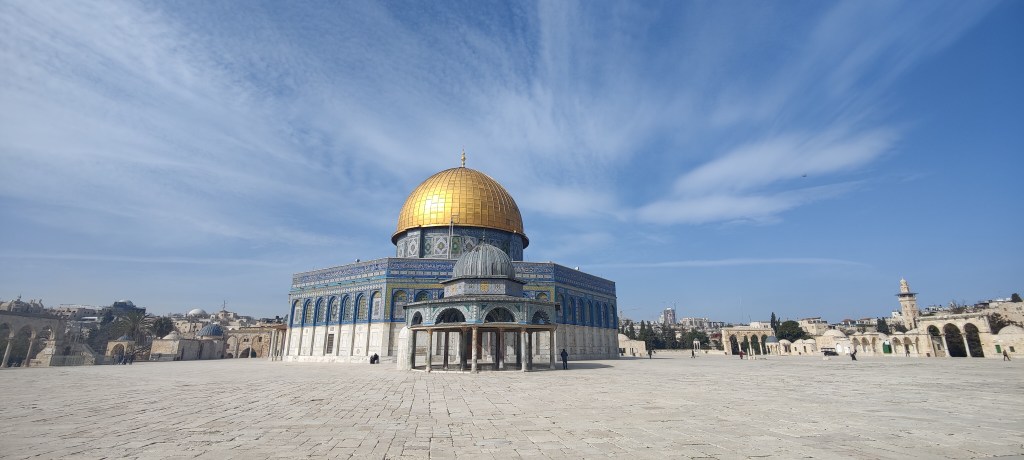
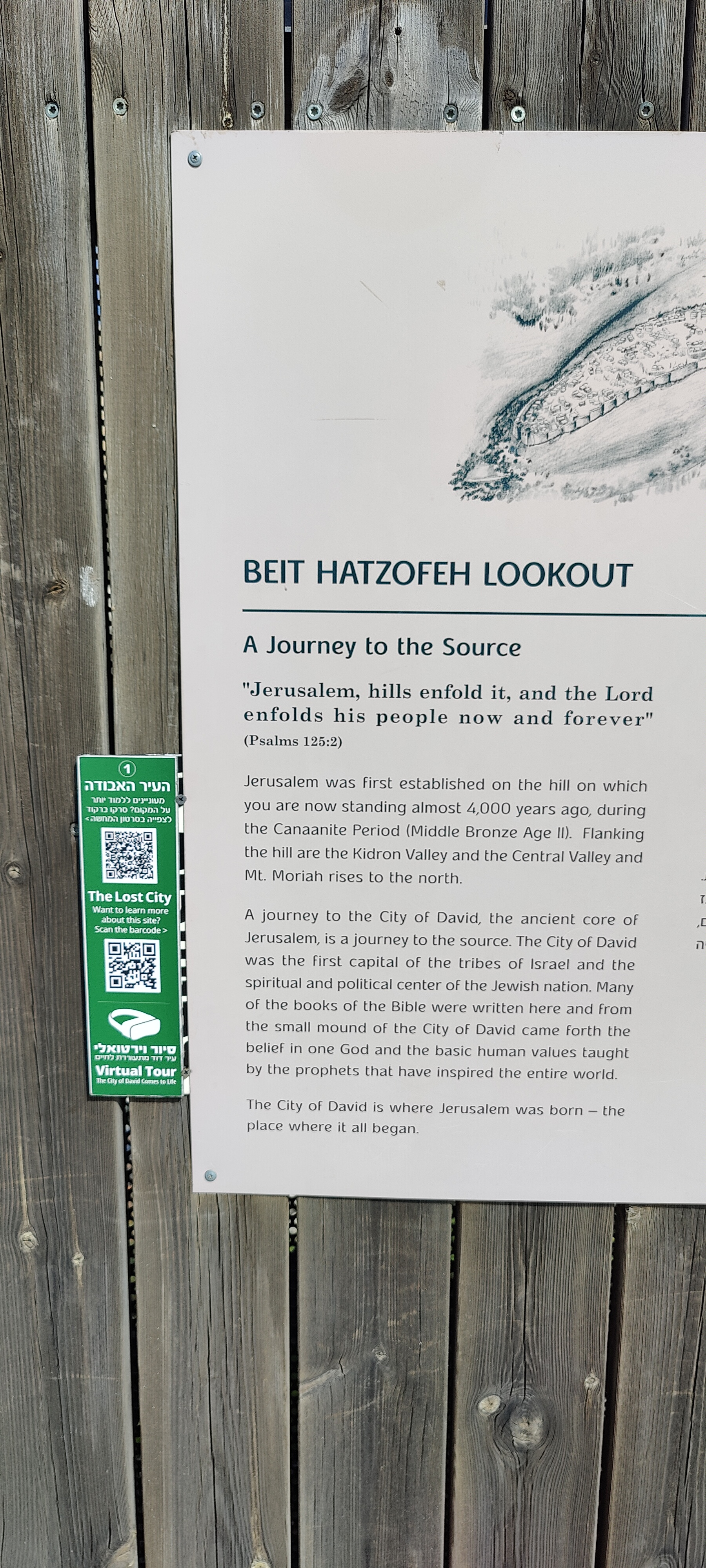
My next stop was not that far away from the Temple Mount. I was going to the City of David, which is just around the corner from the Dung Gate. Now try to keep up…City of David is the place it all began. Before there were any Jerusalem at all. So the famous walls around the Old Town are actually not that old at all. Even the walls around Temple Mount are older. But the real Old Town is actually situated outside the Old Town walls and is thought to be some 3000 years ago the former royal residence of the Israelite king David. The archaeological excavations are ongoing, and nobody is sure of anything yet. I took a tour there called the Biblical Jerusalem. It takes three hours and is happening only once or twice a week at 11AM. That’s why I had to plan my visit for this particular day. Glad I did. The guide was great, and the group was small (the one in Hebrew was larger than the English one). The highlight for me was the tunnels underground – the Hezekiah’s Tunnel to be exact. It is a water tunnel that was carved within the City of David in ancient times…sometimes in the late 9th or early 8th century BC. The tunnel leads from the Gihon Spring to the Pool of Siloam and is about 500 metres long. According to the ancient texts, the tunnel was excavated by two teams, one starting at each end of the tunnel and then meeting in the middle. That alone is a technological feat when you think about when it was made. You have to come prepared for the Hezekiah’s Tunnel, because you can walk through it. But you need a flashlight, water shoes and the willingness to walk for 20 minutes through the water that can be as high as 70 cm and is constantly 18 degrees Celsius. I was the only one on our tour that came prepared. I had my video camera light and I bought myself a pair of water shoes from the gift shop by the ticket counter. It was pitch black in the tunnel and it would be impossible to go through without a flashlight. The water was nice but the tunnel itself was not made for me…sometimes too low and sometimes too narrow but I could go through it even with my backpack on. Thanks to the warm day and right clothing I was already dry when we finished the tour up in the visitor centre again.
I had lunch in an Arab restaurant near the Damascus gate. It’s wonderful when you order some dish and they bring all the other stuff as well to eat. I ordered some rice with lamb and got additionally a bowl of soup, two loaves of pita bread and three different sauces/salads. It was after 3PM when I finished my lunch but it was too early to go back to Tel Aviv. There was one more site that I had my eye on – The Mount of Olives. So I took a bus up there to take in some panoramic views of Jerusalem. Unfortunately, the sky had become clouded and the light was not the best anymore. From the observation platform, I walked downhill past the cemetery to wait for the bus to take me around the town back to the train station.
Today I was also wiser about how to use the Rav-Kav card better. When you don’t use the credit amount on the card, you can buy actual Daily Passes for different regions. A one-way train ticket from Jerusalem to Tel Aviv (or reverse) costs NIS 21.50, whereas an all-day ticket for Jerusalem and Tel Aviv costs NIS 32, so with this daily ticket, you have everything in Jerusalem and everything in Tel Aviv (and some surrounding towns), as well as the option to ride from Jerusalem to Tel Aviv (or reverse) and back by train as many times as you like. Last time I paid twice as much for the transport. So I’m learning. And you need your public transport in Jerusalem because it is one hill after another you have to climb up and down.
Unfortunately, no video survived this day as the memory card in my camera died from unrecognizable reasons.
FRIDAY
The Market Day. Also looking forward to the Sabbath dinner, which will start at sunset.
I set off towards Carmel market, the largest market, or shuk, in Tel Aviv. Near there is also a local craft market on Tuesdays and Fridays. A whole street filled with artisans with their handicrafts. I went there mostly for the jewellery and other accessories. It didn’t disappoint starting from 10 AM the stalls were up and all kinds of merchandise on display on yet another sunny day. I walked the street many times up and down to take it all in and see what will catch my eye. I finally settled with a pair of engraved red earrings on a gilded layer with a matching necklace with the same design. Next, I went to the Carmel Market which was filled with people buying stuff for the upcoming weekend. So did I. Finally I went to the Dizengoff centre once again to get the rest of the presents to take home with and the circle had come to the end. What I started a week ago feeling unsure of my surroundings, a week later I could find my way through Tel Aviv without the help of Google Maps or anyone else.
After returning to the apartment, I had only an hour to shower and get ready for the evening. I also needed to consider that the buses will stop soon before the Shabbat begin and it would be wise to get there before that. Being part of the Couchsurfing network (which I honestly had forgotten during the past two years of Covid) enabled me to find and apply to an event in a nearby town of Holon in Tel Aviv District. There is a Jewish family there who is willing to have quests over to their weekly Shabbat dinner and witness all the procedures and customs of this holy day that starts at sunset and lasts until the next sunset. When I say Jewish family then I mean that his family is coming from Iran and her family from Sweden, but Judaism is uniting them here in Israel. Judaism for them is a lifestyle because it is involved in all aspects of their lives. There are many Israelis who are even more religious and many who are less, but the Shabbat holiday is one very important one that they experience every week. There are so many things that are special to Judaism. For example, the following of lunar and solar calendar at the same time a lunisolar calendar if you please. Meaning that months are based on lunar months, but years are based on solar years. It is used for religious observance but it’s also an official calendar of the state of Israel. As the lunar calendar is a bit shorter, then they get an extra month every once and a while. This month now is one of these leap months. According to tradition, the Hebrew calendar started at the time of Creation, placed at 3761 BCE. The current (2021/2022) Hebrew year is 5782. There are two different dates on their ID cards. Year 5782 began at sunset on 6 September 2021 and will end at sunset on 25 September 2022.
The Hebrew week is a cycle of seven days, mirroring the seven-day period of the Book of Genesis in which the world is created. Starting on Sunday and ending on the seventh day, Shabbat, as its Hebrew name indicates, is a day of rest in Judaism. They take the resting part very seriously. You are not allowed to create anything new during Shabbat, so you need to do all the chores and cooking before Shabbat starts. So there is always a big rushing going on in Jewish households before the sunset. They are cooking food for the whole 24 hours. During Shabbat they can not cook anything, they can only use their special ovens to keep the food warm for the rest of the holiday. Many Jews who strictly observe Shabbat (the Sabbath) refrain from using electrical devices on Shabbat, with the exception of passive enjoyment of devices that were set up before Shabbat. For example, this also includes turning the light on in the fridge by opening the door (so you need to remove the light before the Shabbat) or using elevators or electric doors for leaving the house (instead they use stairs and side doors if needed) to visit your relatives on foot.
The sunset was after 5PM, so everything was ready before that. Siri was turned off (she was sad to leave and was going to miss them) as well as the phones and other communication devices were switched off and put away. The Shabbat procedures started with the woman of the family to light the candles. It was followed by the ritual washing of hands with a cup – pouring three times with your left hand on your right hand and then three times with your right hand on your left hand. After that, you were not allowed to speak before the man of the household blessed and offered you a piece of bread (which needed to be bigger than an olive) with olive oil and salt. After that, you could speak again. There was a reading of a bible to start the dinner and later there was a reading from the bible that ended the meal. Between those rituals, it was a dinner like any other. You could eat what was on the table and talk about everything. Everything was kosher and/or parva of course and followed another set of rules that what could be in it and whatnot. For example, because there was meat on the table there couldn’t be any products including dairy anywhere. You could eat dairy related foods again after 6 hours have passed from the meal that included meat. Maybe for that reason, it’s probably quite easy to become a vegetarian while living in Israel. There was an interesting discussion of the number of rules related to Judaism and the Hebrew language and how becoming a practitioner of Judaism resembled more of a hiring process than any other religion in the world. You really need to want it and the first reaction is to try to push you away from the idea. It takes at least a year to study first officially with a rabbi and then there is a test you need to pass. Being a man you also need a head shape suitable for wearing a kippah (or yarmulke) – a brimless cap, usually made of cloth, traditionally worn by Jewish males to fulfil the customary requirement that the head be covered (my head kept rejecting the cap). You need also to speak Hebrew enough to read and understand all the prayers and be willing to follow all the rules and take them to be a part of your everyday life. Like when having tea with a dessert you need to remember that you put the teabag in the cup first and then add water. If you do it another way around then adding teabag into the water will create some new colours in the process. And that is not allowed during Shabbat. Six hours passed very quickly, and it was time to leave. As public transport (buses, trains etc) is not working during Shabbat than to get back to Tel Aviv was possible by walking, taking a bike or finding a taxi driven by an Arab who didn’t care about the Shabbat. This is their best time of the week of course because they can ask for more money on Friday night from people who like to get around. Being over 10 km away was the only solution for me as well.
SATURDAY
Day of rest and rain. And some vegetarian pizza after the sunset.
SUNDAY
The departure time for my flight out of Tel Aviv was at 11 AM. So I woke up early, cleaned the apartment, packed the bag and took my favourite 8:15 train to the airport. Arriving 2,5 hours before looked like enough time because the check-in was just opened and there were not too many people in the queue. Before getting to the queue, there was a security check. They liked me for some reason and started to ask me all the possible questions about my travels in Israel, my personal life and if I have had any contacts with the Palestinians etc. The only way is to answer truthfully and after about 10 minutes of questioning, they allowed me to advance to the check-in line. The line didn’t move much during the next hour. I can’t imagine how it is possible to check-in people so slowly. Anyway, after I finally reached the counter and put my suitcase on the belt, I was informed that I couldn’t fly with the mask I had on. The same mask I had flown to Israel just some days ago. I needed an N52 mask. So after standing in line for over an hour they sent me running through the airport with my suitcase to find some vendor selling these damn masks. It was 10AM. After finding the mask I ran back to the counter, ignored the queue and managed finally to check in my suitcase at 10:15. The next hurdle was the boarding pass checking machine that didn’t like mine and instead of allowing me to go through the usual security check, it pointed me to a more specific security check. Together with many other people from the same flight as me. This security check needed to go through all my belongings with the explosives detection brush and do it as slowly as possible. Finally getting through that x-ray machine, the next obstacle was the passport control machine, which as you remember didn’t like my passport. So of course they had to register my passport manually and as slowly as possible. It was 10:45 when I finally got through all the obstacles and all I needed to do was to run through the whole airport and find my gate. Luckily I chose the right corridor and managed to get to the right gate by 10:51. It was still open. They allowed me to board the Lauda plane (this is only funny to people speaking Estonian) and two minutes later (after another person arrived) the cabin crew announced that “boarding is completed”. In 3+ hours we were in Vienna, got through the border control, picked up my suitcase, changed terminals, checked in my suitcase and went to the Burger King to treat myself to their biggest meal. All that in half an hour. Sounds like Europe again. In a few hours, my last flight departed and I was on my way home again. The airport there felt even more like home…no border control, no lines, the suitcase already waiting for me on the luggage belt and my family waiting for me outside. So instead of “going to the moon” next time, consider visiting Estonia. It’s easier.
For the full video “My Israel” click here:
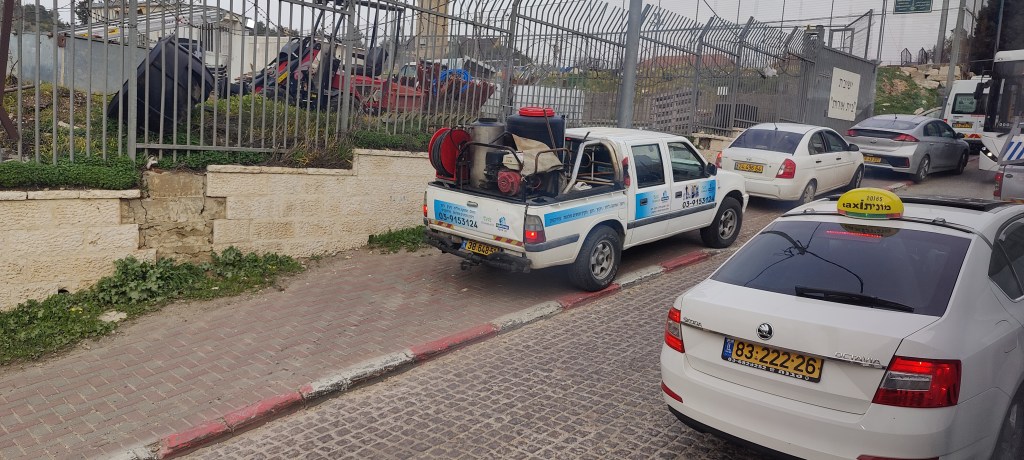
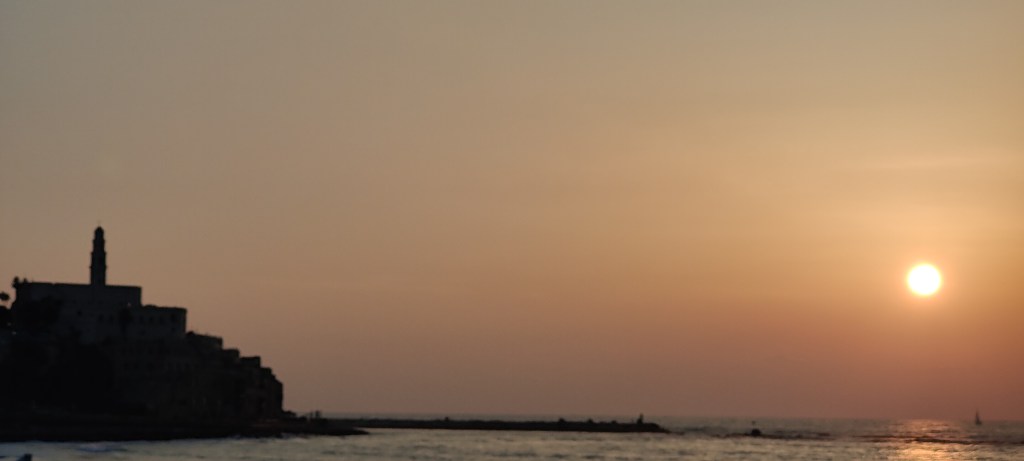
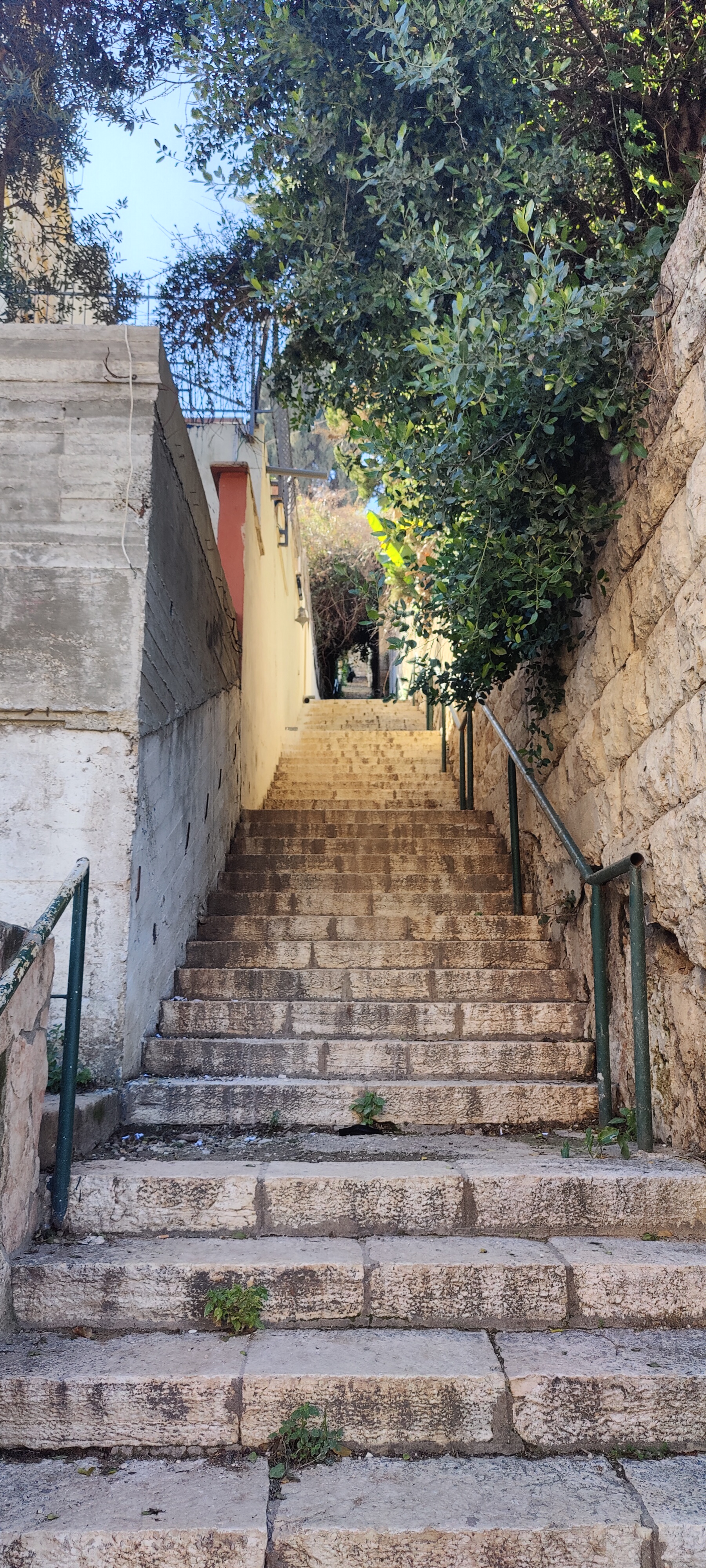
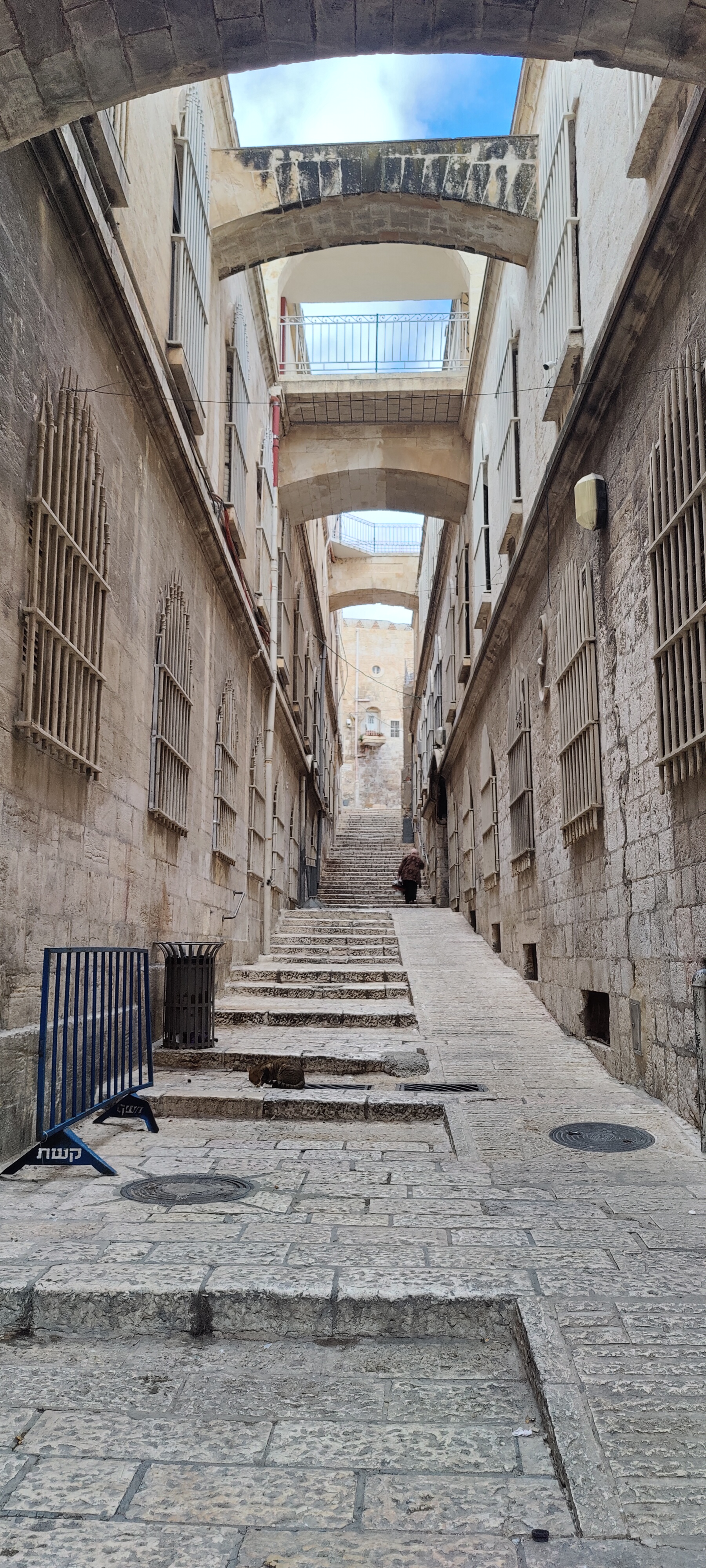
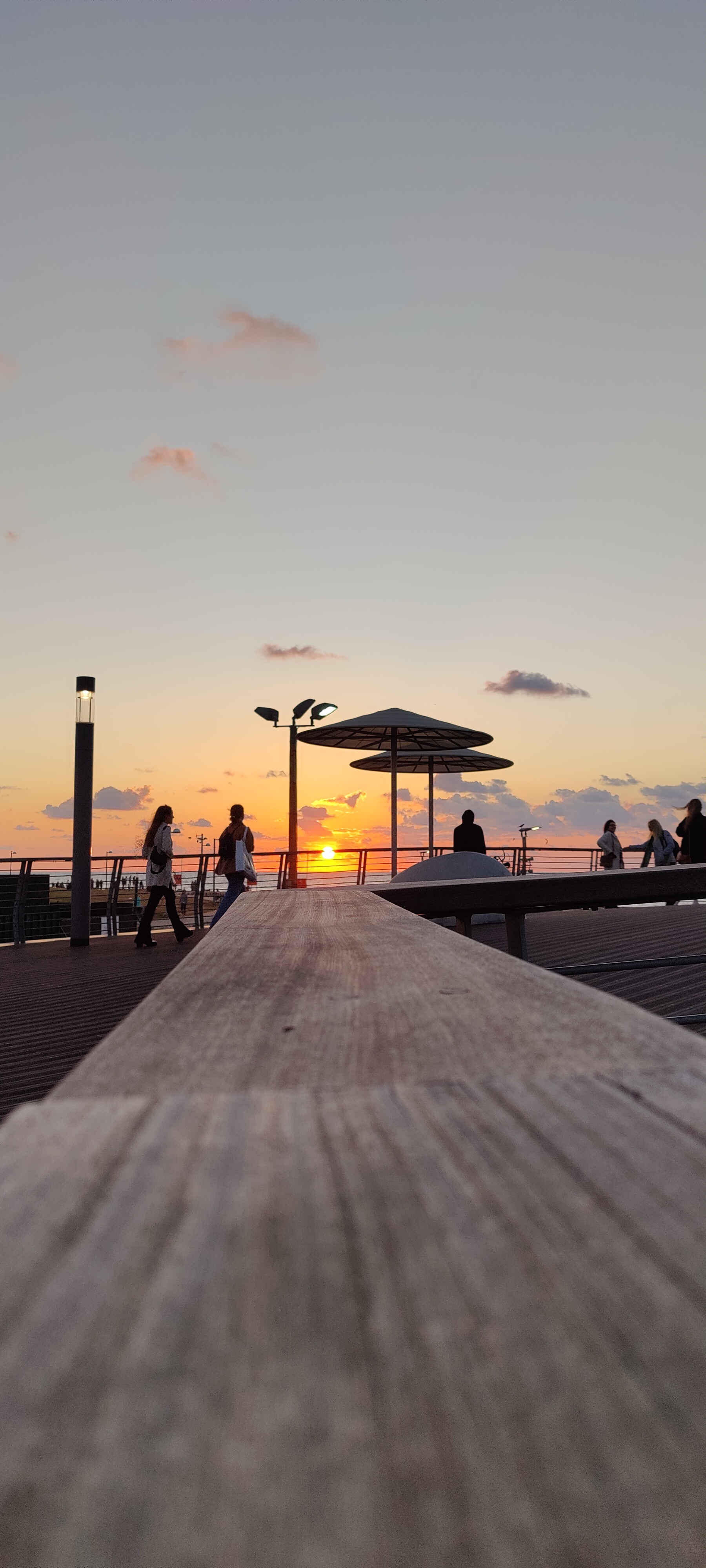
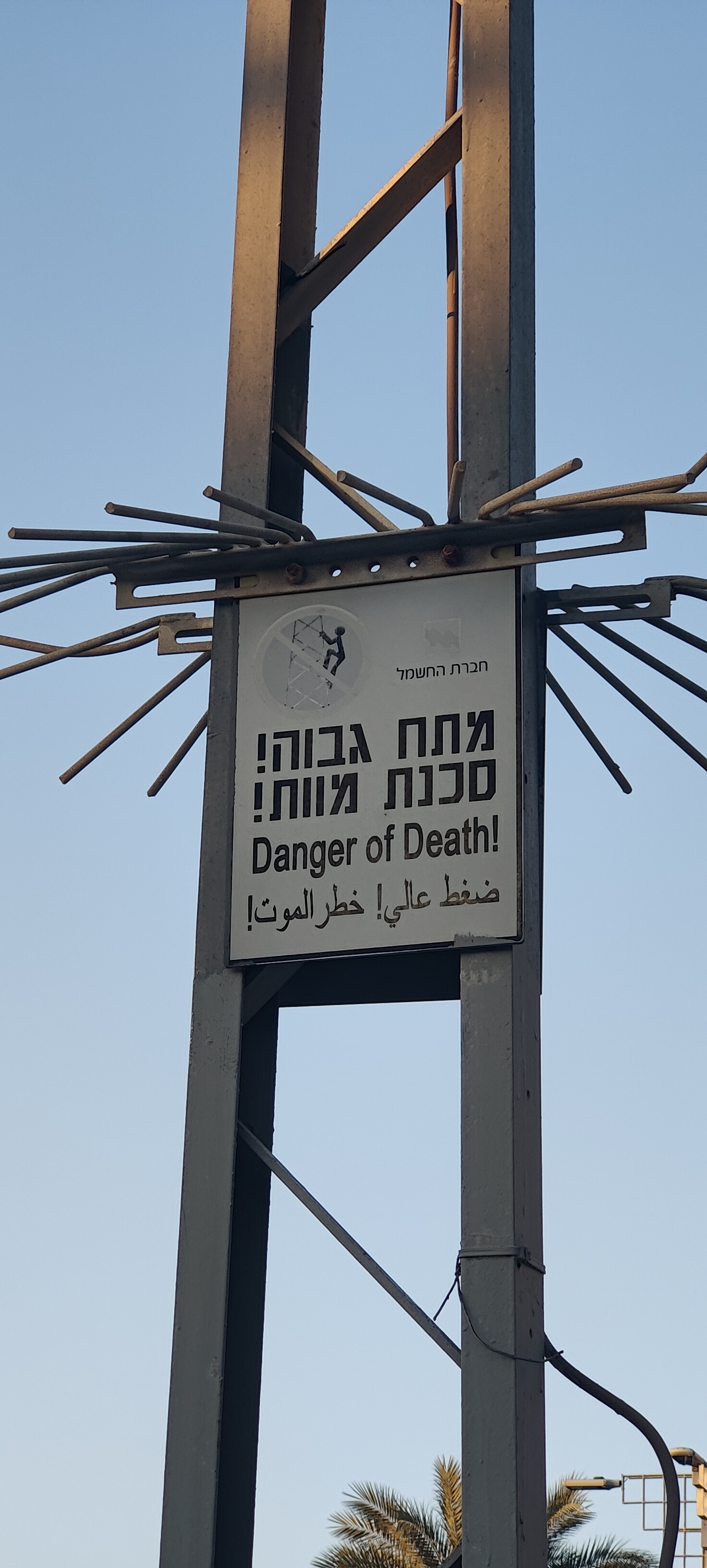
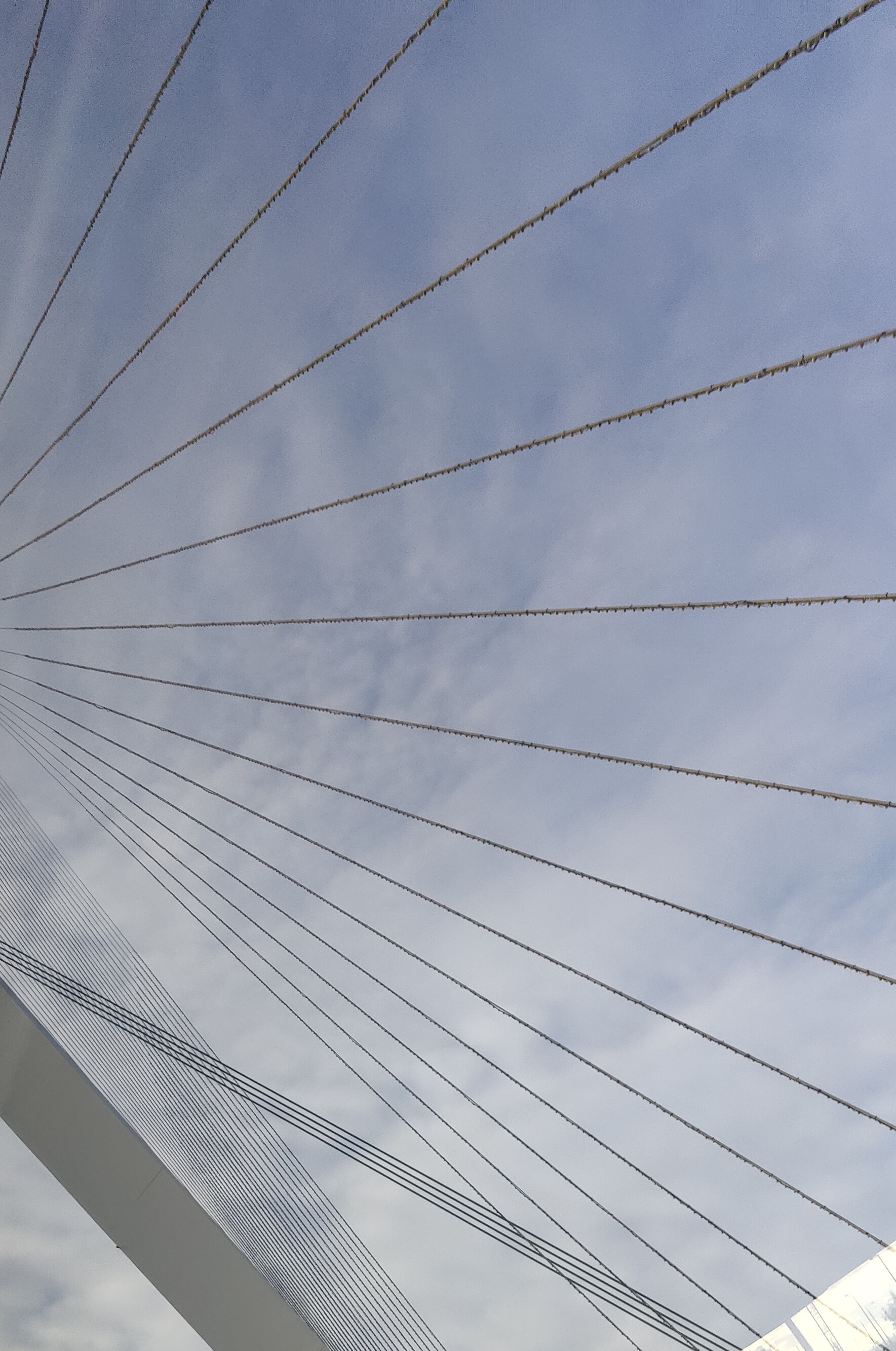
Here are some photos as well:


























 jatravellingxp.com