
07.-13.04.2018
The flight from Helsinki to Beijing, the capital of China, takes about 8 hours and arrived at 6 in the morning. The time difference is +5 hours. During the flight, I watched several good movies that I had not been able to go to the cinema to watch. The flight was very comfortable and I did not think much that the plane had 55 lines, 9 seats in each line, more than 500 people in one on the flight. Finnair is the shortest and most comfortable airline between China and Europe.
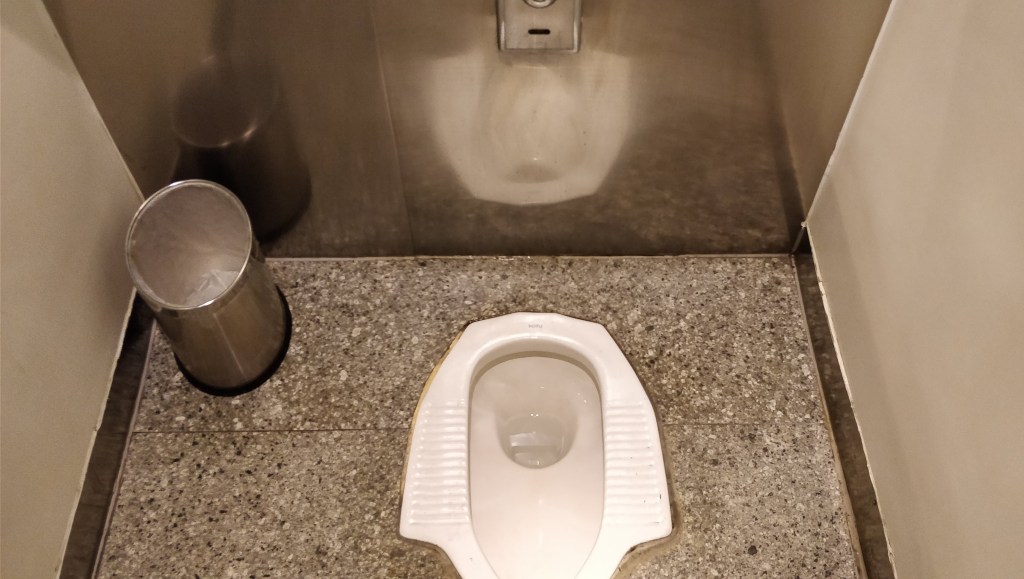
Beijing’s first impression is somewhat different than I expected. Or rather, I had a prejudice of a great Chinatown in my head. But it is a very clean, spacious, polite metropolis with history and culture. Public toilets are located in every few hundred meters and large green areas in every block. They call the toilet project jokingly toilet-revolution (sounds like, but it is one important investment into tourism infrastructure. The interior shown in the picture below is also used in very good restaurants. Some of them have even installed the usual toilet seats for the tourists.
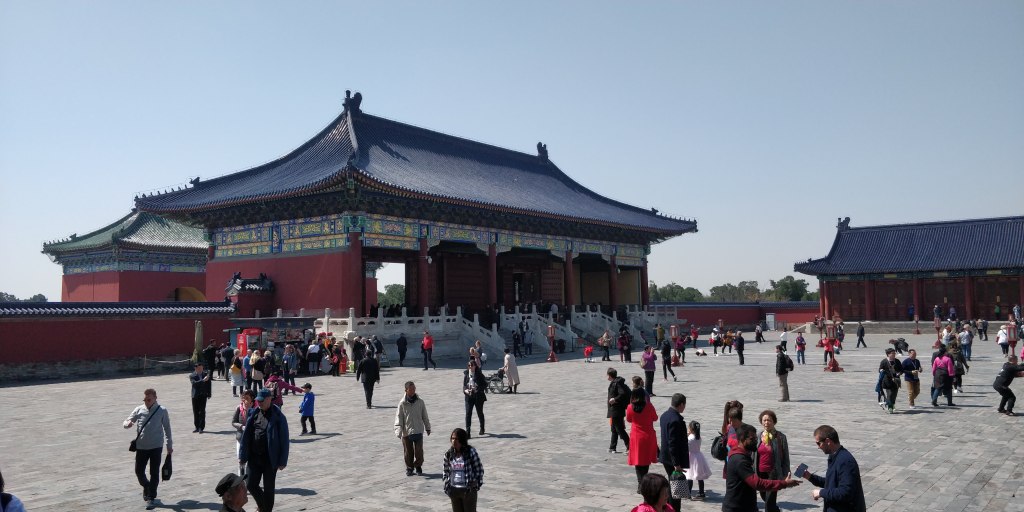
Thanks to the time difference and early arrival. we managed to visit The Temple of Heaven and its surroundings already on the first day. The 270 ha park is full of historic Chinese architecture and is overall very impressive. The colours here are definitely characteristic of Beijing (the House of Emperors) – roofs with blue and green glazed stone, meeting room chair covers are red and tables with blue linen. White and black are not used – these are the colours of mourning. Golden yellow is the imperial colour that others should not be using. Green is the colour of wealth and blue is the colour of the sky. If before I had heard and seen pictures of people in parks coming together and doing different physical exercises. Now I had seen it with your own eyes. Mostly senior people spend most of the day in the green area where music is playing, people are dancing, gymnastics and badminton, chess and other games are played. Noodles with a hot water thermos is a must accessory for everyone.
The traffic is heavy, but everything is going smoothly. The honking is popular but it’s not nervous activity. The local rhythm can be learned quickly. Crossing the street is dangerous in the beginning because you are in constant danger from the electric scooters, which come quietly from all directions. If the weather is cold all cyclists than motorcyclists have kind of quilts with gloves that cover the entire front of the cycle and your hands on the handlebars as well. Very practical.
Beijing takes the principles of sustainable development seriously, but above all, they understood the need for strong intervention to ensure air quality. For example, cars can drive for 6 days in a week. Each car licence plate has a specific day of the week on it when the car cannot be in traffic. Otherwise, there will be fines. Still, there is a queue for buying a new car, from which the recipient of the permit is selected (1 every 2 months). You may never get lucky. The city is home to 22 million people and 4 million or more cars drive here every day, Thirty years ago there were no cars, and all those millions rode bicycles, creating large-scale congestion with them. For cycling, the city is ideal without hills. The mountains only appear as a backdrop.
The lack of heels is noticeable in the cityscape, local women wear low shoes and beautiful low-heeled shoes for festive occasions. A tourist can be recognized by wearing heels or because when she enters the store, one sales clerk is always following closely behind. What hospitality! The Chinese themselves buy brand products in insane quantities from abroad. The cost of one trip exceeds 2,000 USD. At home, the products are all the same and much cheaper, but bringing from abroad appear to have more secure quality. One also needs to pay a tax on luxury products, when you buy goods from China. Cheap goods are everywhere, but they smell suspiciously of vodka and oil. The other goods are still expensive. There is no intermediate choice and a selection of unique local products. Or I just couldn’t find them.
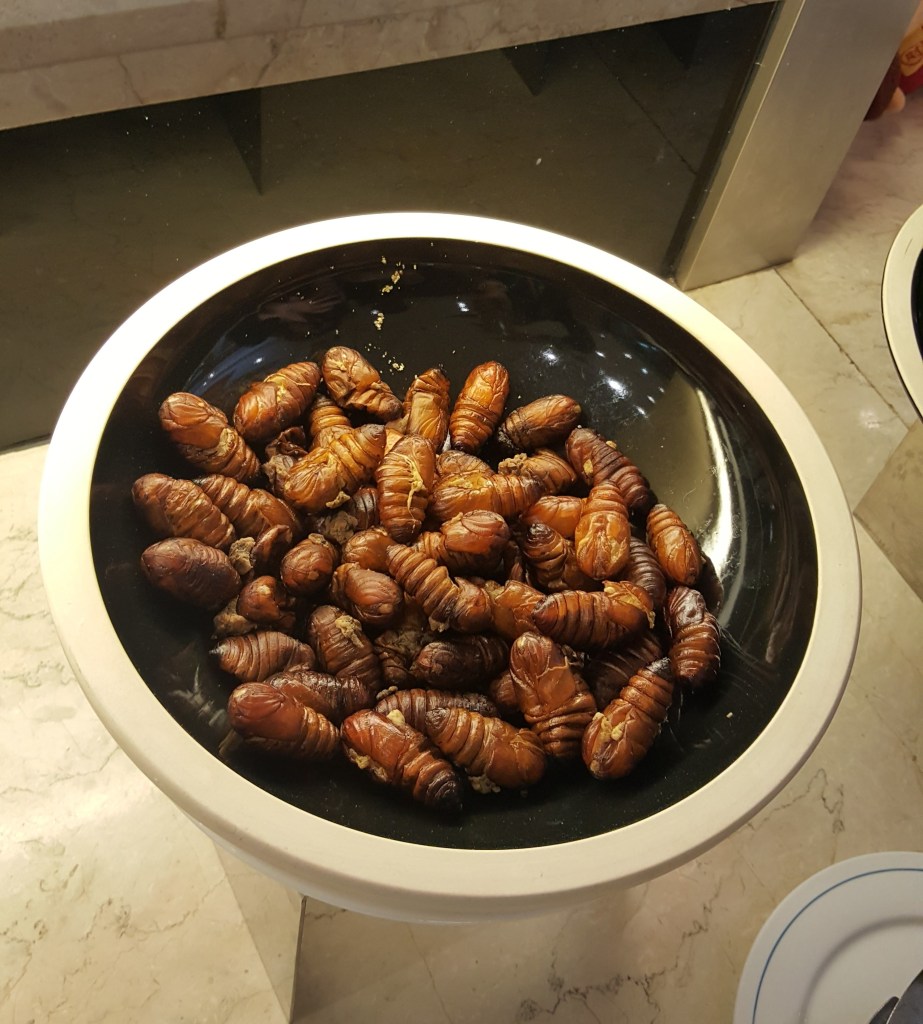
In the evening, after 9 o’clock nothing more happens. The city is crowded, but only restaurants and food stores are open. So find a small fruit shop, buy fresh, sweet, juicy, red strawberries and have a go at them in the park. A good souvenir idea is a bag of silkworms or some other insects. The first half of a silkworm tastes shrimp-like, with a crust on top and a soft, muddy aftertaste. What the second half of the worm tastes like, I wouldn’t know.
The next day I was invited to Beijing Silicon Valley, where China’s largest travel portal Sina is located together with its Weibo travel channel (travel videos, short documentaries, campaigns, events (web celebrities), tourism awards, etc.). People read, watch, share and comment. And repeat. It’s like travel-themed TV shows, Instagram, Youtube and Twitter put together and multiplied by millions. 170+ million daily users, of whom about 80% are under 30 years of age. Tourism, travel and lifestyle are what Sina is all about, and that’s why they the major influencers of Chinese travelling habits. Everything is very fancy in their office, one floor is full of different sports facilities, there are studios for interviews and five-storey office space. In the middle of the large lobby hangs the Sina-eye, which shows the news and reminds that the big brother is watching. All the staff were young and the branding of the whole company is animated, narrated by stories and fabulous pictures of fast-moving shots of people enjoying life. Exchanging business cards is a ritual. It is handed over to one person at a time, holding it with two hands. The other then reads carefully through the business card. This is the local small talk.
Visiting Beijing art district was a nice experience. Located in the former territory of some military industry. The territory is huge like everything else here, it is characterized by old industrial buildings, railway, different large tanks etc. So much art has been put into these. Art is present in rooms, galleries, cafes. However, I limited myself to watching and shooting and some small souvenirs. On the way back to the city, one local street caught my eye. A street with small shops and restaurants. With the help of a map and the subway, I managed to find my way back there. Using the subway was extremely easy. I would say that it is easier to take the subway in Beijing than change the public transport line back home. From those streets, I got the full local experience. People walking with dogs, cycling, dancing folk dances on the streets, communicating. Mostly older people though with dogs and children. No strollers. The younger ones are alone at home and communicate in Wechat probably (1+ billion active users). They say themselves that the young people are so lazy that order food in (there are 4 million food couriers in Beijing) and the work is done by robots. The people themselves live in the online world. The subway is crowded with people, but no one notices anyone else because they are all in their mobile phones.
The weather has been great, all week 23-25 degrees Celsius and sunny. We got to experience the famous Beijing wind that flies all loose things around. I was thinking
that perhaps it would be wiser to take refuge, but the locals carried on. So do I. The air has been clean, no smog. Air quality indicator today was 110, the worst can be 900.
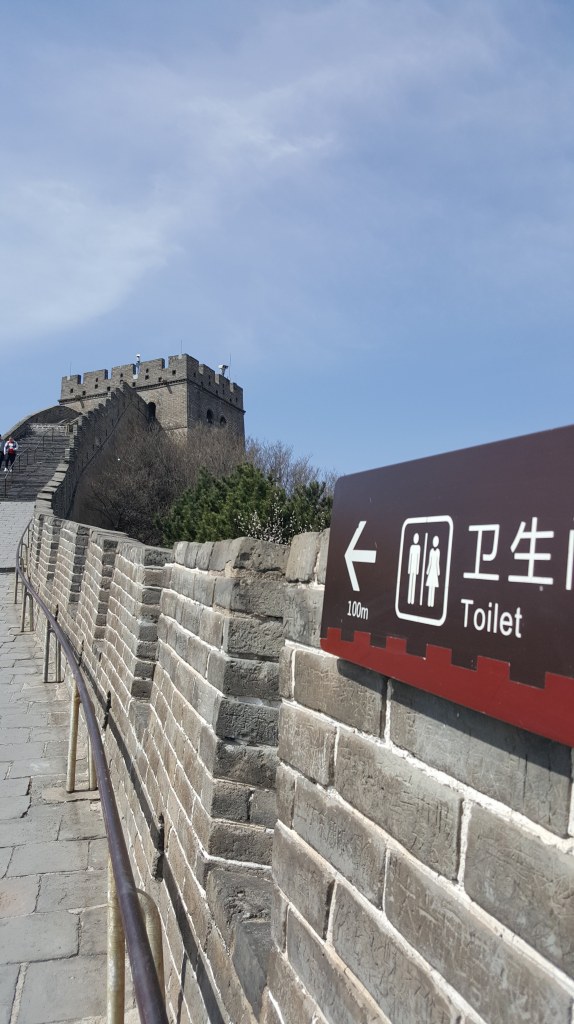
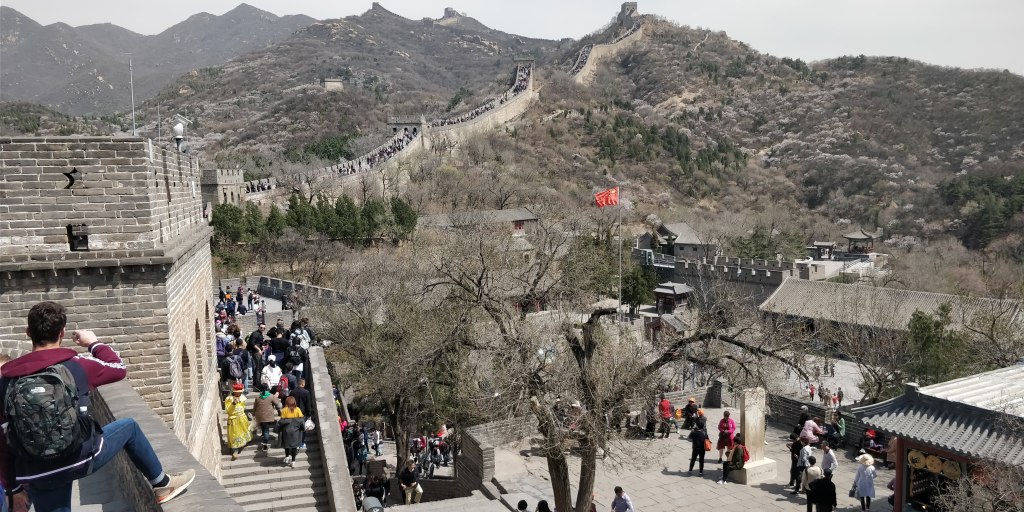
The Great Wall of China and the Forbidden City in one day? Can it be done? Yes, it’s doable. Start with the wall early in the morning. Arriving at the Great Wall of China, it became clear that we can’t get in. Some top officials were expected to come inspecting and no buses were allowed to pass through the gate before that. Unfortunately, they were not there yet. Our guide quickly searched for a local who got paid some money and introduced us to the back door. This way to do things is called guanxi (pronounce as you like) and this is completely normal. The Great Wall of China – and only 1.5 hours on the spot – at first seemed unfair, but climbing along the wall became quickly clear that this is all we can manage. It is a steep walk in the mountains. Even though they have built a smooth walkway on top of those. It was quite nice to know that the toilet is located 100 meters that way, but to get there, you have to climb several storeys worth of stairs. There were a lot of visitors, so the guide suggested us to take the left wall. Later it turned out to be steeper – yeah so much steeper. In the low season, there are 30,000 people a day visiting. Even on snowy days, even though I can’t imagine how it can be done when slippery. In the high season there can up to 100,000 people per day. Trees bloom everywhere and the hillsides are covered with white wild peach blossoms. Wonderful view.
After driving back to the city, we had 2 hours planned in the Forbidden City. That was enough for the first impression. The palace is huge. In China, it was believed that God has 10,000 rooms. The emperor built himself 9999.5 rooms. The Chinese emperors had up to 1,000 concubines and there, in turn, had a very elaborate social hierarchy. Who is more important and who less. Everything is somehow so overwhelming and imperceptible. The names of the palaces all describe the supreme peace and care that only the emperor (God) can provide. A maximum of 80,000 people can enter the forbidden city every day. In the high season, this is not enough. In the low season, 30,000 people a day can visit.


My experience in Beijing was a very pleasant one and I would recommend it to everyone who hasn’t been there yet. But the country is huge and there is so much more to explore. And thank you J.J. for the notes on which this story is based on.
 jatravellingxp.com